
Fix Fall Protection
Horizontal lifeline systems for continuous movement across roofs, loading bays, pipe racks, and open access zones.
This modular horizontal fixed-line system is built around stainless-steel wire rope, tensioning hardware, end terminals, runners, shock absorbers, and multiple mounting options. It is intended for work areas where users must move laterally while staying connected, such as roof walk paths, loading/unloading zones, overhead vehicle bays, and pipe-rack structures.
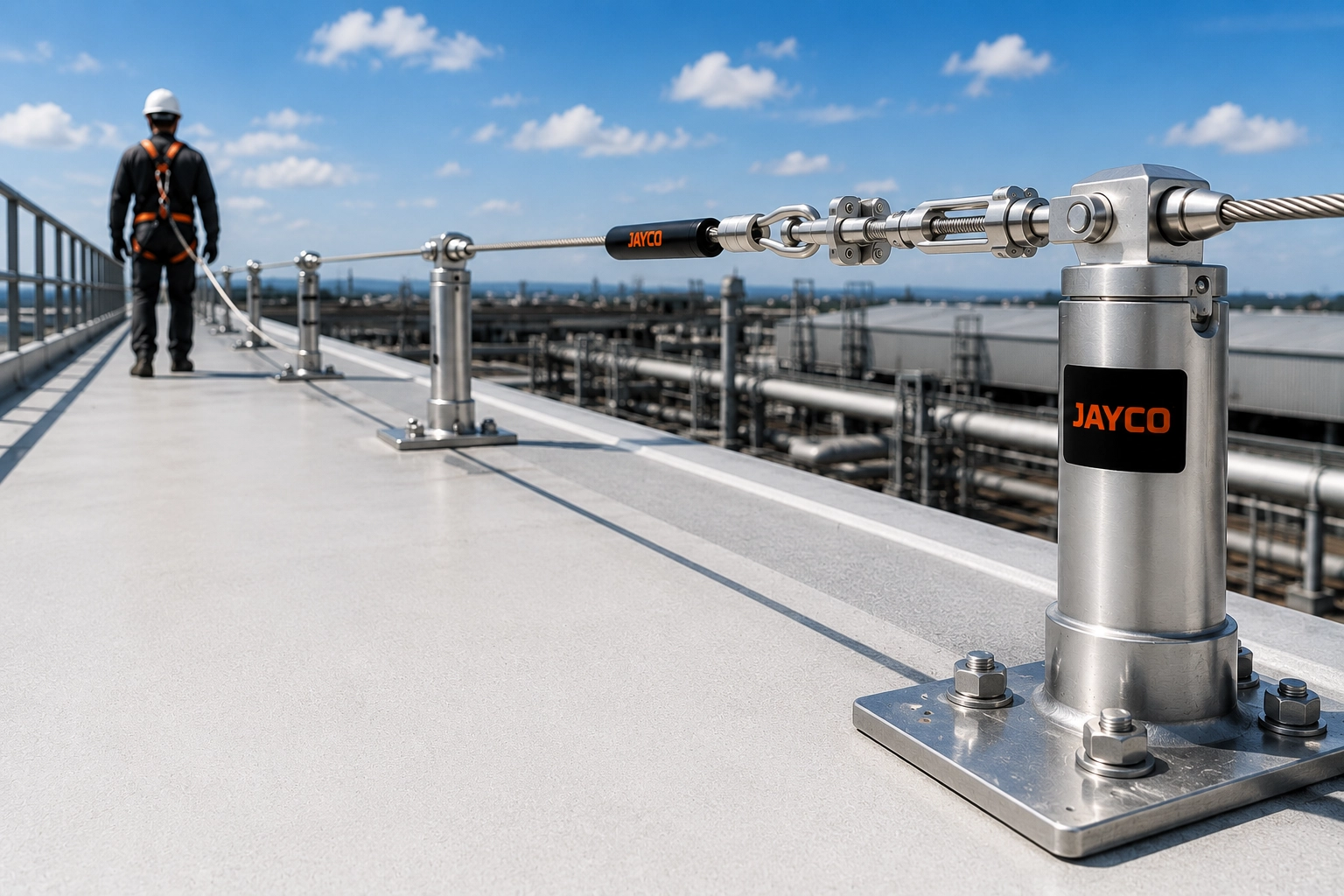
4
application types for horizontal lifeline layouts
Core Hardware
Every component has a defined role: tensioning, termination, guidance, energy control, or worker travel.
Customers often see a horizontal lifeline as only a cable, but the system depends on how the cable is tensioned, terminated, guided around intermediate points, and used by the runner. The hardware below keeps the line usable from start to end while reducing the need for the worker to disconnect during movement.
JS 29004-A JHL-1007 Tensioner
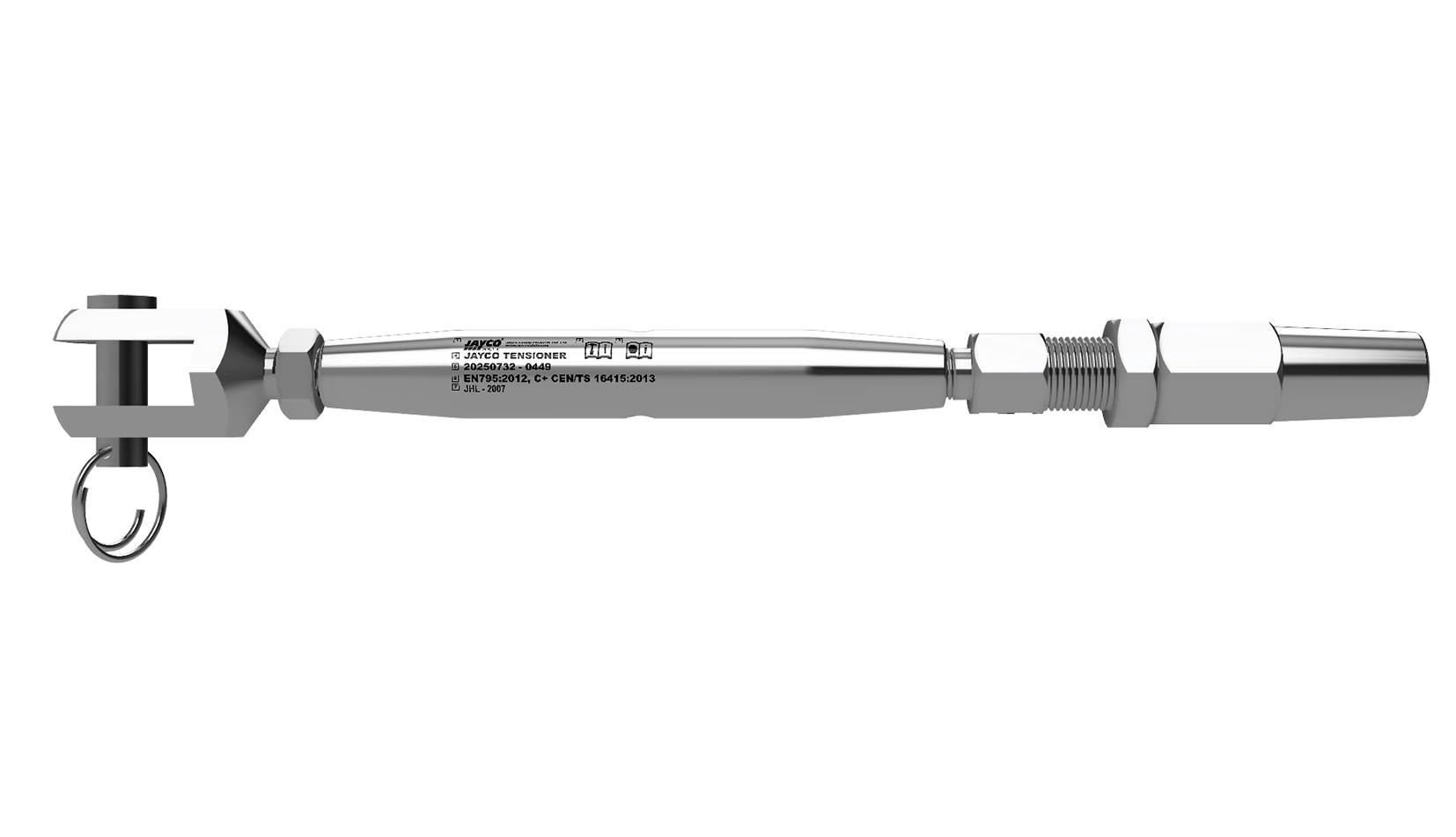
- Used at the start point to pre-tension the horizontal lifeline before it is put into service.
- Built-in turnbuckle allows controlled adjustment of wire-rope tension during installation and inspection.
- Swageless end terminal with 4-jaw SS collet grips the wire without requiring swaging equipment.
- Wire-rope feed indicator helps the installer confirm that the cable has been inserted correctly.
- If the indicator is damaged or displaced after a jerk or fall, the line should be removed from use until inspected.
- Body indicator helps check turnbuckle thread correctness so the tensioner is not over-extended.
- SS 316 construction supports corrosion resistance in roof and industrial environments.
JS 29004-B JHL-1008 Swageless End Terminal
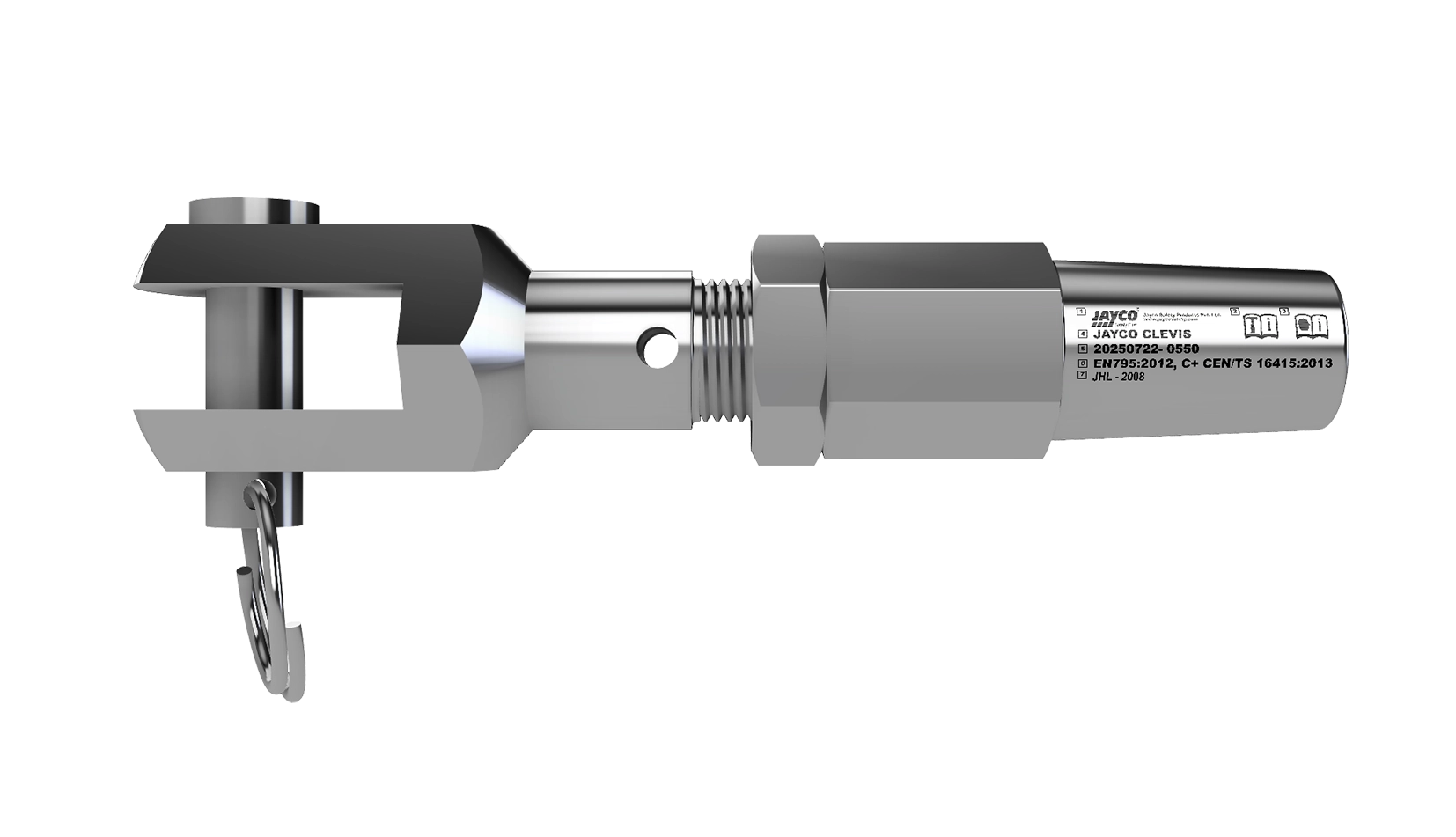
- Clevis loose-end terminal holds the wire at the opposite end of the lifeline run.
- Swageless end terminal with 4-jaw SS collet grips the wire firmly without site swaging.
- Wire-rope indicator helps verify cable insertion and supports easier inspection.
- If the terminal is damaged or displaced after a jerk or fall, the line should not be used until checked.
- SS 316 clevis construction supports long-term corrosion resistance.
JS 29004-C JHL-TIB-8 Intermediate
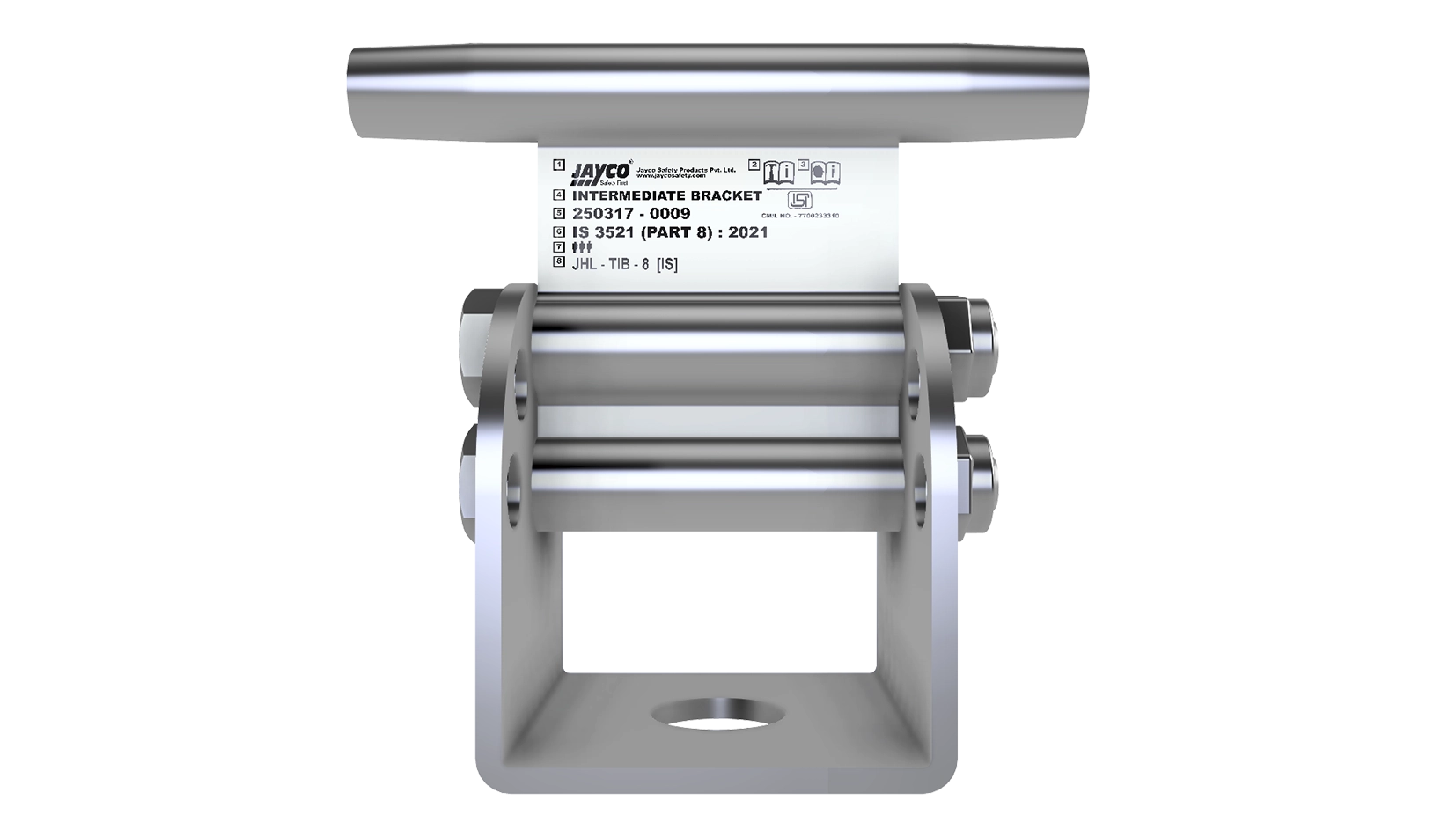
- Used between end points to reduce lifeline sag over longer cable runs.
- Helps keep the wire correctly supported and tensioned across the route.
- The wire passes through the intermediate while the runner is designed to slide over it.
- Maximum span of 15 meters is possible for up to 4 users working simultaneously on the line.
- Five orientation inclinations help installers adjust the component to different structure angles.
- SS 316 grade material supports outdoor and industrial durability in exposed roof or plant environments.
JS 29004-D JHL-TIBC8 90 Degree Curve
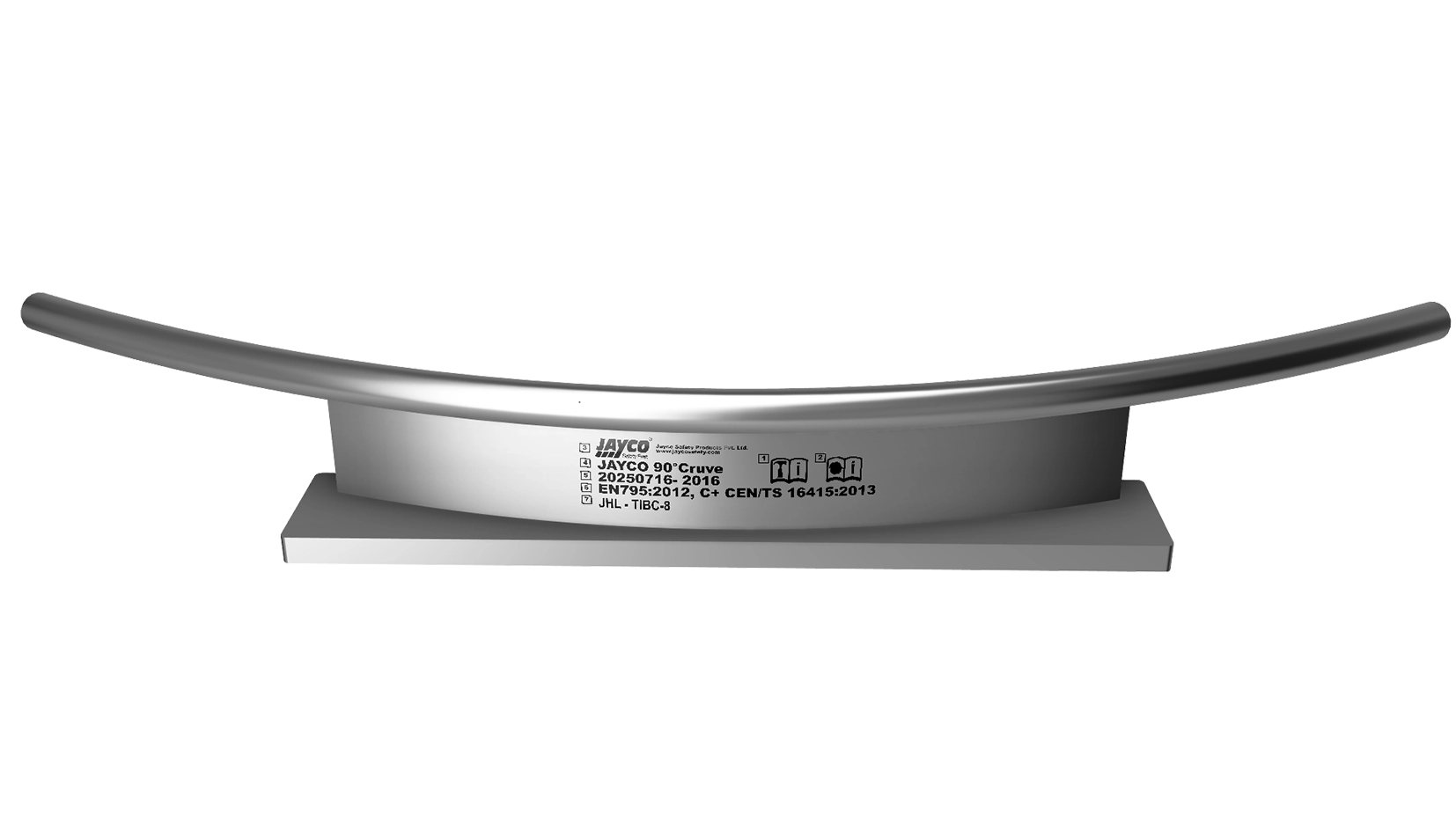
- Allows the horizontal line to turn through an L-shaped route instead of ending at every corner.
- Wire passes through the hollow pipe of the 90-degree curve for guided cable routing.
- JHL runner glides over the curve post so the worker can continue movement around the corner.
- SS 316 grade construction supports corrosion resistance around corner-routing points.
- Can be fixed to the structure using M16 nuts, bolts, and washers for a secure mechanical connection.
JS 29010-E JHL-FL Shock Absorber
.webp "JS 29010-E JHL-FL shock absorber")
- Force limiter absorbs shock energy during a fall event so the lifeline does not transfer the full impact directly to the user.
- Designed to restrict the load to 6 kN on the user under fall-arrest conditions.
- SS 316 grade 5 mm plate is laser-cut in spring form to create controlled deformation behavior.
- In a real fall, the force limiter can deform, expand, or twist, which indicates that inspection or replacement is required.
- ABS plastic casing cover provides space for necessary product and inspection information.
JS 29010-F JHL Runner
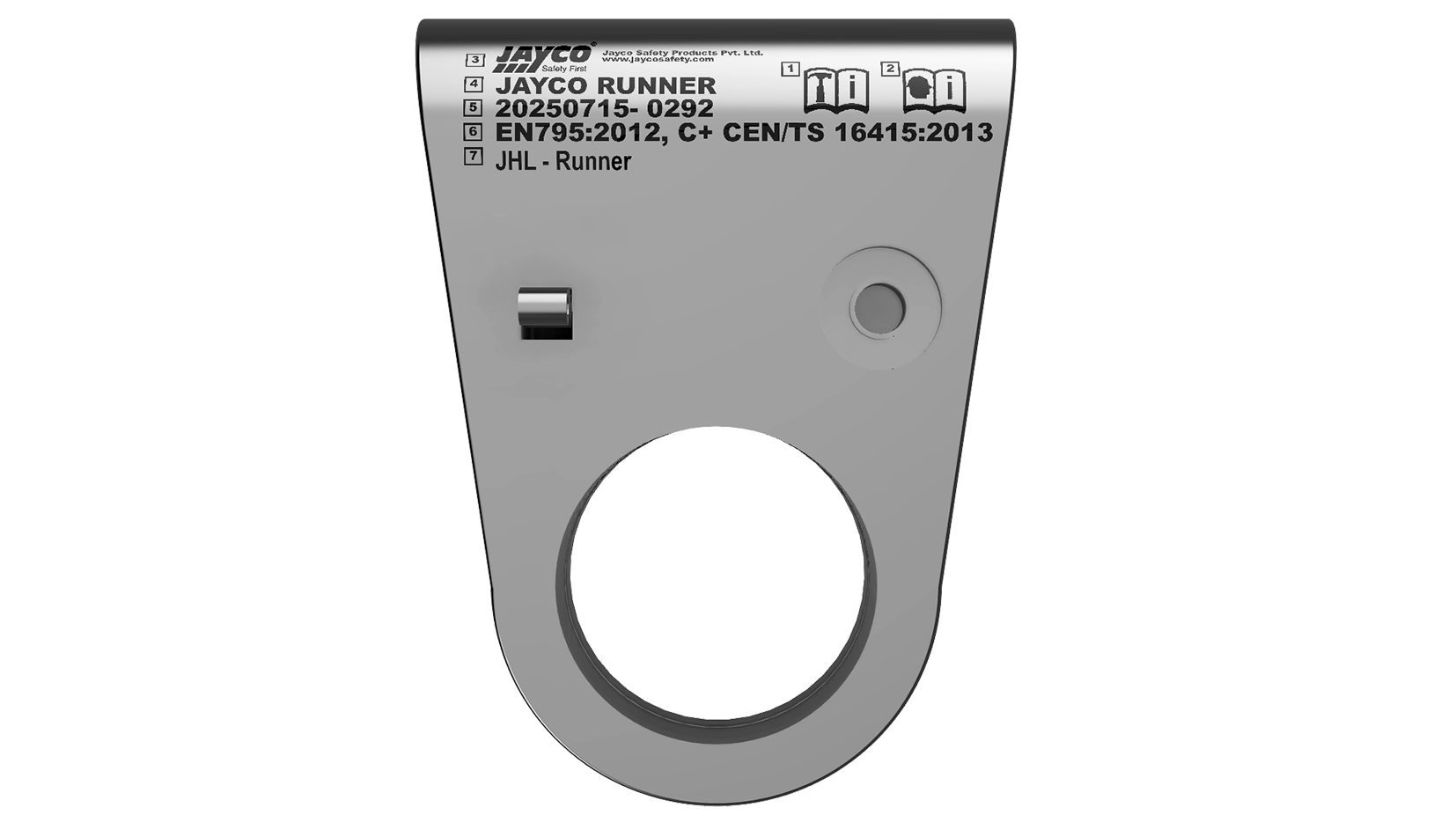
- Used by the worker to travel along the line from start point to end point.
- The user can remain attached while moving, reducing the risk created by repeated disconnection.
- SS 316 grade construction supports durability for PPE-related use.
- Glides over the intermediate and 90-degree corner post for smoother travel across complex routes.
- Two-hand opening and closing action helps prevent accidental release from the lifeline.
Cable And Mounting Options
Cable, pulley hardware, roof posts, and sandwich mounts adapt the lifeline to different structures.
The lifeline needs a reliable cable and a mounting method that suits the roof or structure. Trapezoidal roofs, standing-seam roofs, columns, ridges, rafters, and purlins all need different connection approaches, so the post and plate options below help the system fit the actual site instead of forcing one standard detail everywhere.
JS 29004-H JHL-1000 Cable
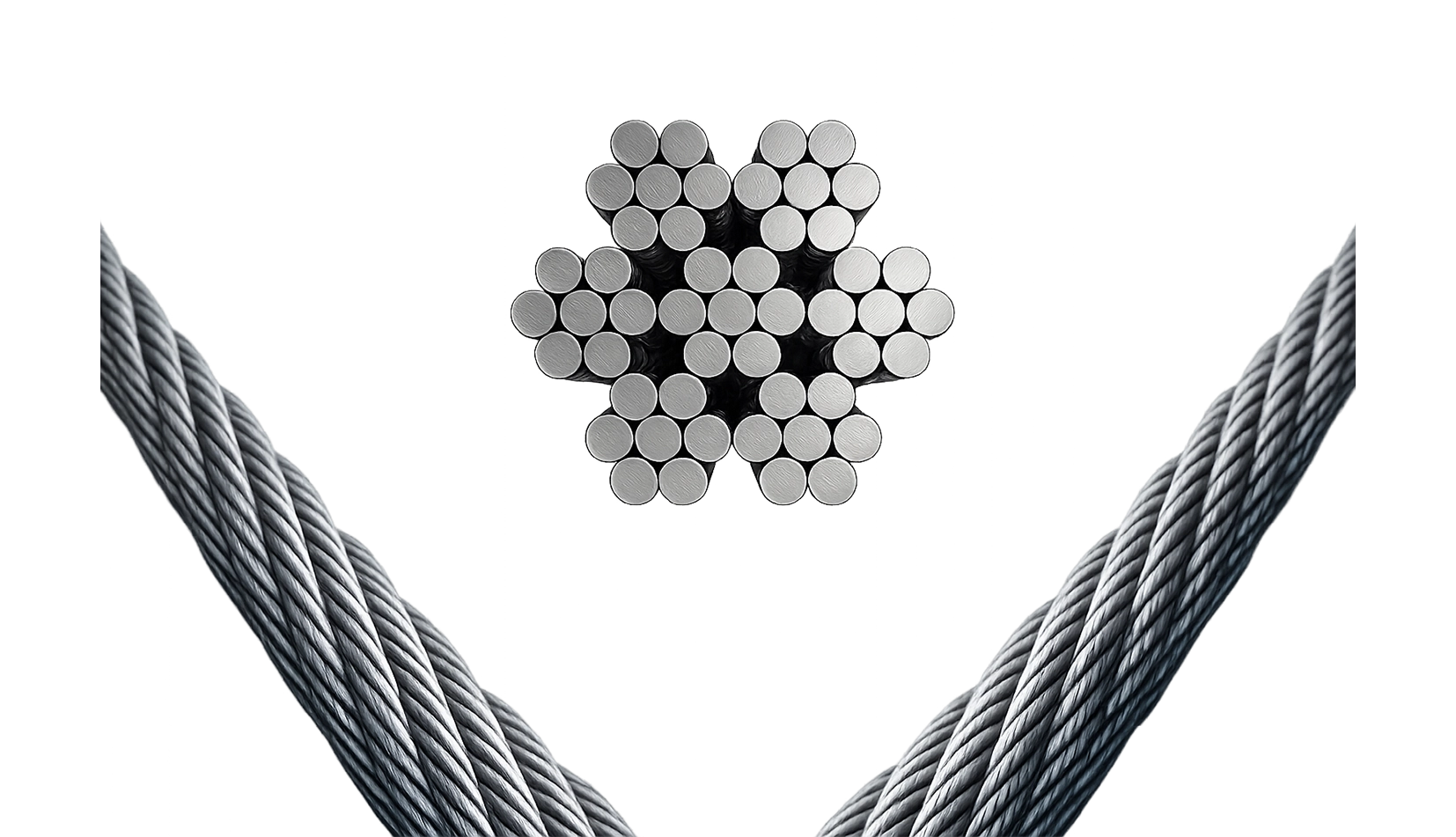
- SS 316 wire rope forms the main horizontal lifeline cable that the runner travels along.
- 8 mm wire diameter balances strength, handling, and compatibility with the system hardware.
- 40 kN minimum breaking strength supports demanding fall-protection applications.
- Maximum cable length of 500 meters supports long routes when designed with the required intermediates and supports.
- 7 x 7 strand construction provides the required cable form for this lifeline system.
JS 20003 Pulley
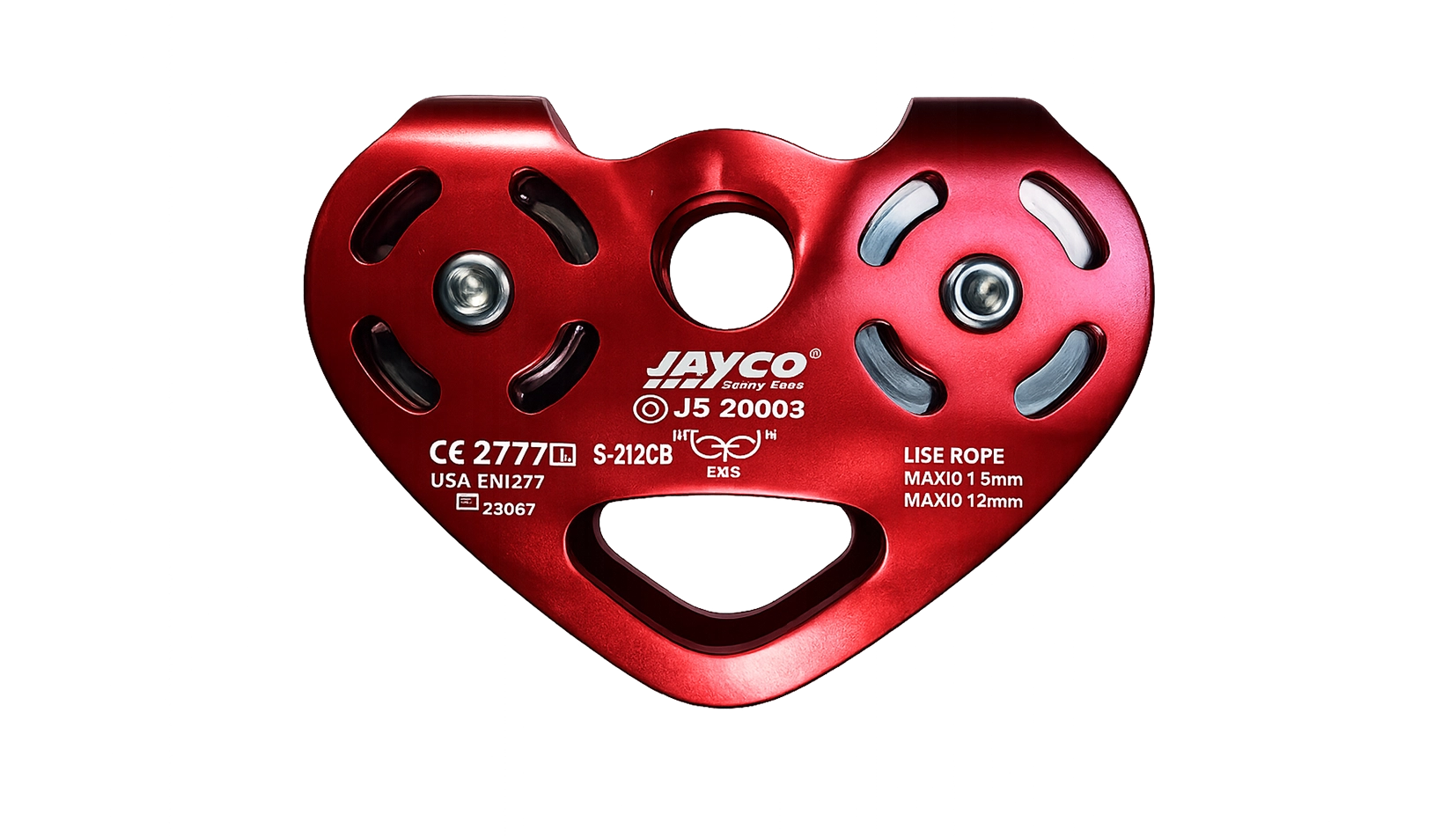
- Tandem pulley is used when the lifeline is installed overhead for loading or unloading activity.
- Stainless-steel sheaves support smooth movement, while the aluminium anodised outer body keeps the component lightweight.
- Used where no intermediate is installed on the line and the worker needs overhead travel support.
JS 29100 JHL-CX-TR-150 Roof Post Rivet Type
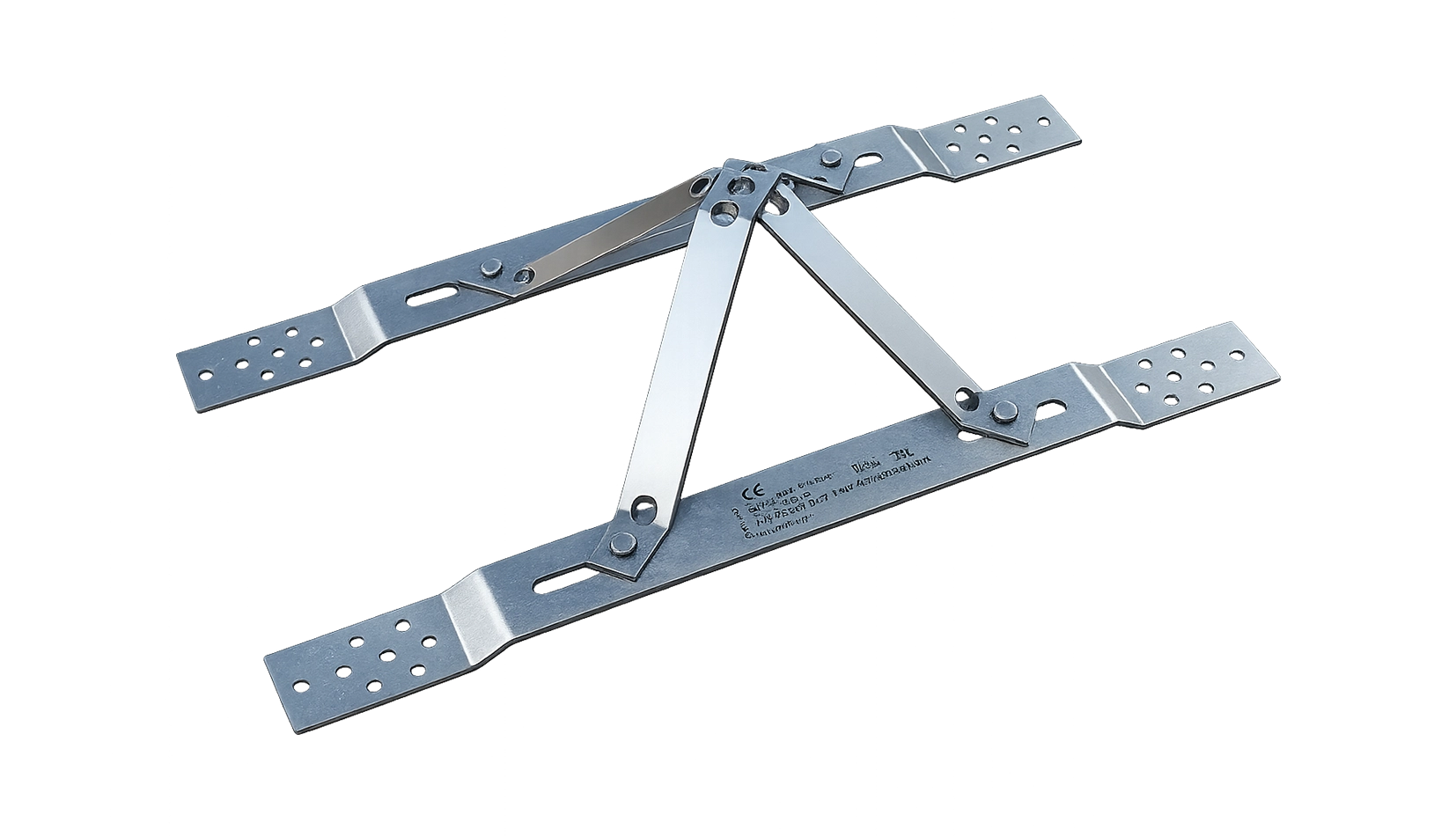
- Extremity or intermediate post used to mount the lifeline on trapezoidal profile roofs.
- Mounted with 16 sets of 7.8 mm aluminium trifold rivets and EPDM washers for secure roof fixing.
- Each rivet has 6 kN shear strength, supporting the mechanical attachment to the roof sheet.
- EPDM washers help seal the roof penetration and reduce leakage risk at the fixing points.
- SS 316 post material is tested for load on both X and Y axes to support multi-directional forces.
JS 29101 JHL-CX-TR-450/600 Roof Post Allen Key Type
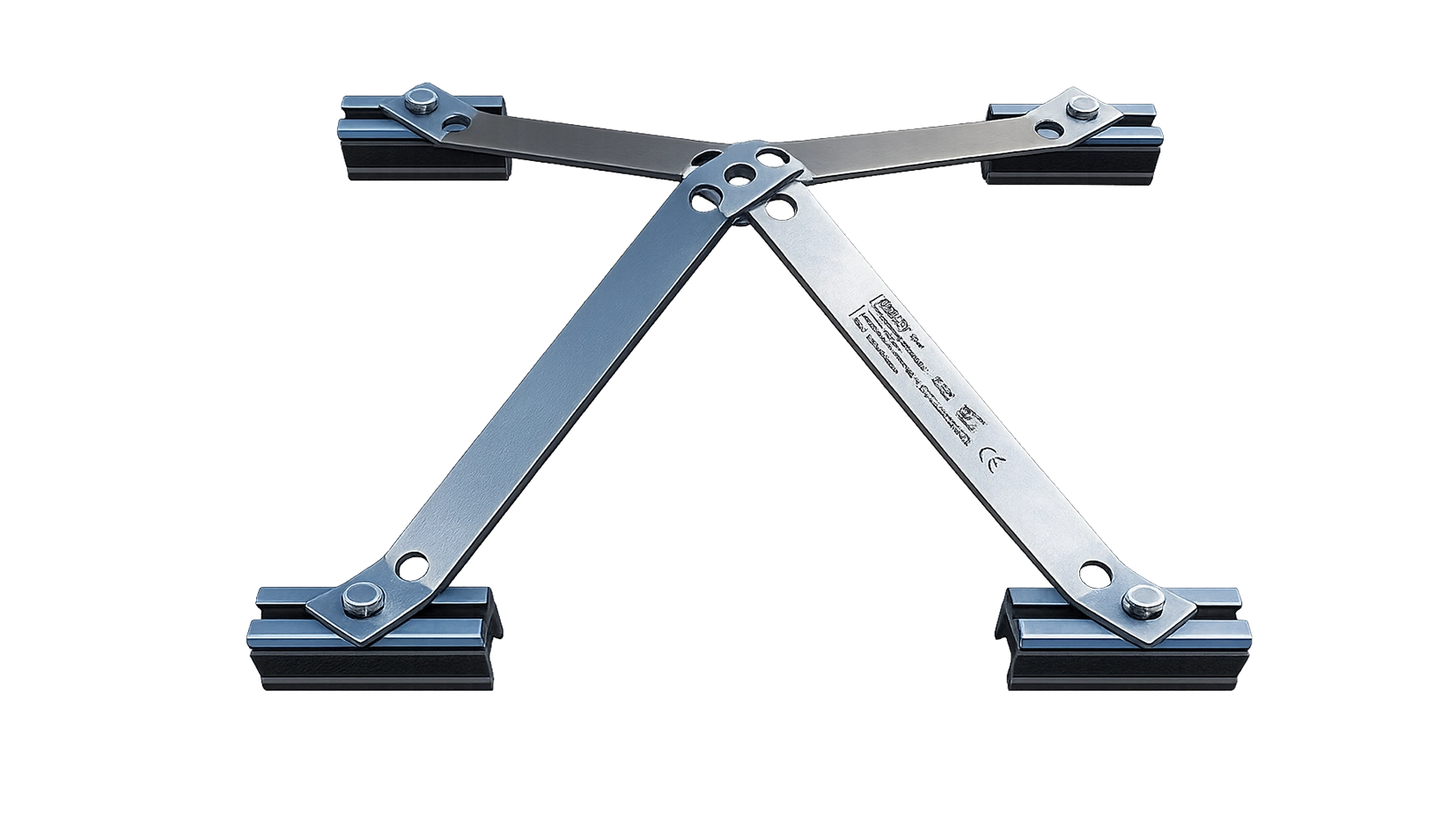
- Extremity or intermediate post used to mount the lifeline on standing-seam profile roofs.
- SS 316 grade material supports corrosion resistance at exposed roof locations.
- No puncturing of the roof is required, which helps preserve the roof sheet and weatherproofing.
- Mounted using 4 aluminium profile brackets with 3 grub screws on each bracket.
- Standing-seam roof pitch can be in the range of 450 mm to 600 mm, helping the post fit common seam layouts.
JS 29102 JHL-SP-PL-XXX Sandwich Post
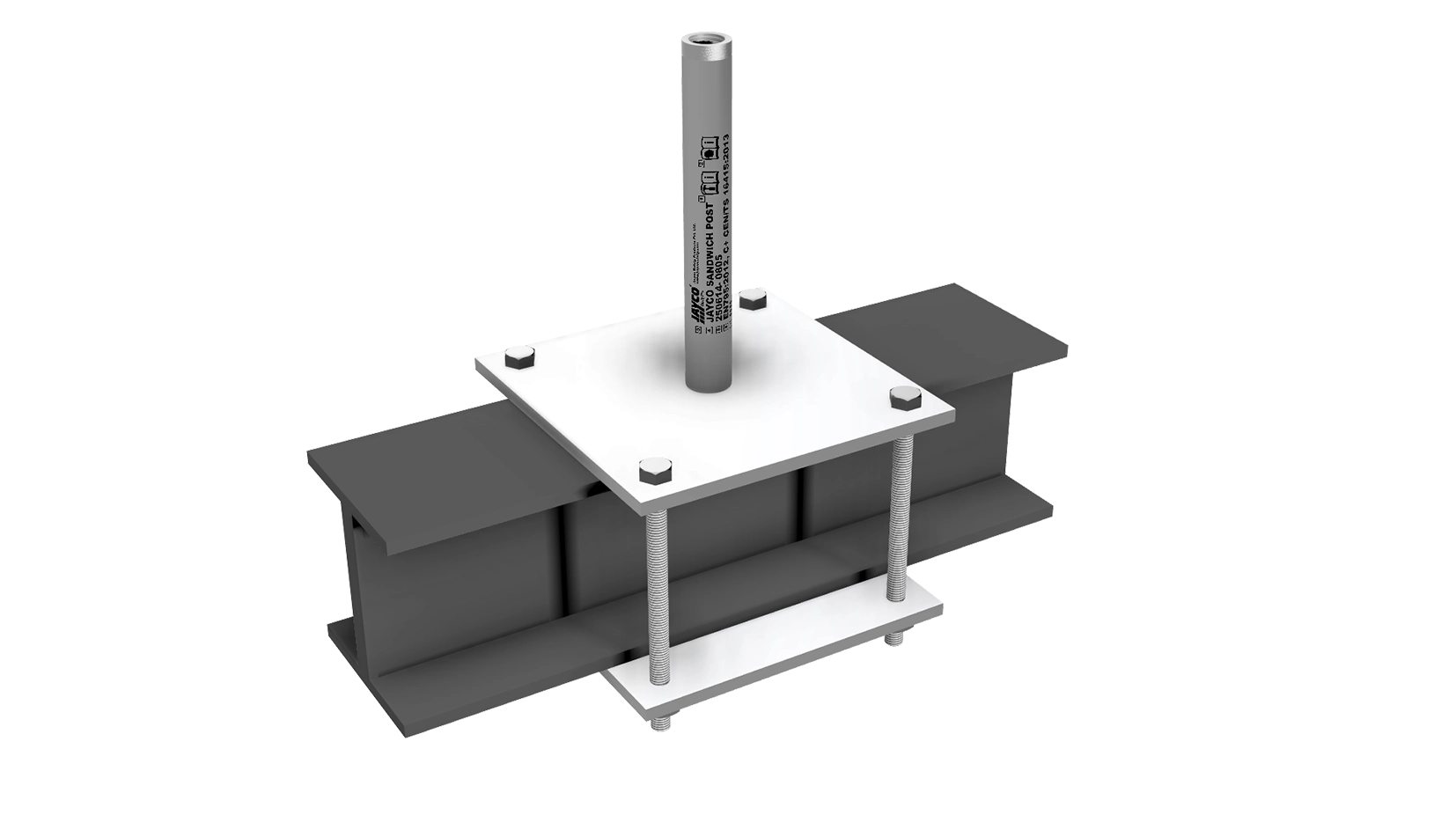
- Used to mount the lifeline on structural members such as columns, ridges, rafters, or purlins.
- Post is sandwiched between bottom and top plates to clamp around the existing structure.
- Top plate includes a projected 300 mm pipe, circumferentially welded at the bottom and surface of the plate.
- 8 mm plate thickness and SS 316 construction support durable structural connection.
- Top part of the pipe has M16 tapping for fixing lifeline hardware and related components.
- Size varies according to structural dimension, with SS studs, nuts, and washers used for firm fixing.
| Code | Reference | Size |
|---|---|---|
| JS 29102 A | JHL-SP-PL-150 | 150 x 150 x 8 mm |
| JS 29102 B | JHL-SP-PL-200 | 200 x 200 x 8 mm |
| JS 29102 C | JHL-SP-PL-250 | 250 x 250 x 8 mm |
| JS 29102 D | JHL-SP-PL-300 | 300 x 300 x 8 mm |
JS 29103 JHL-SP-BR-XXX Sandwich Plate
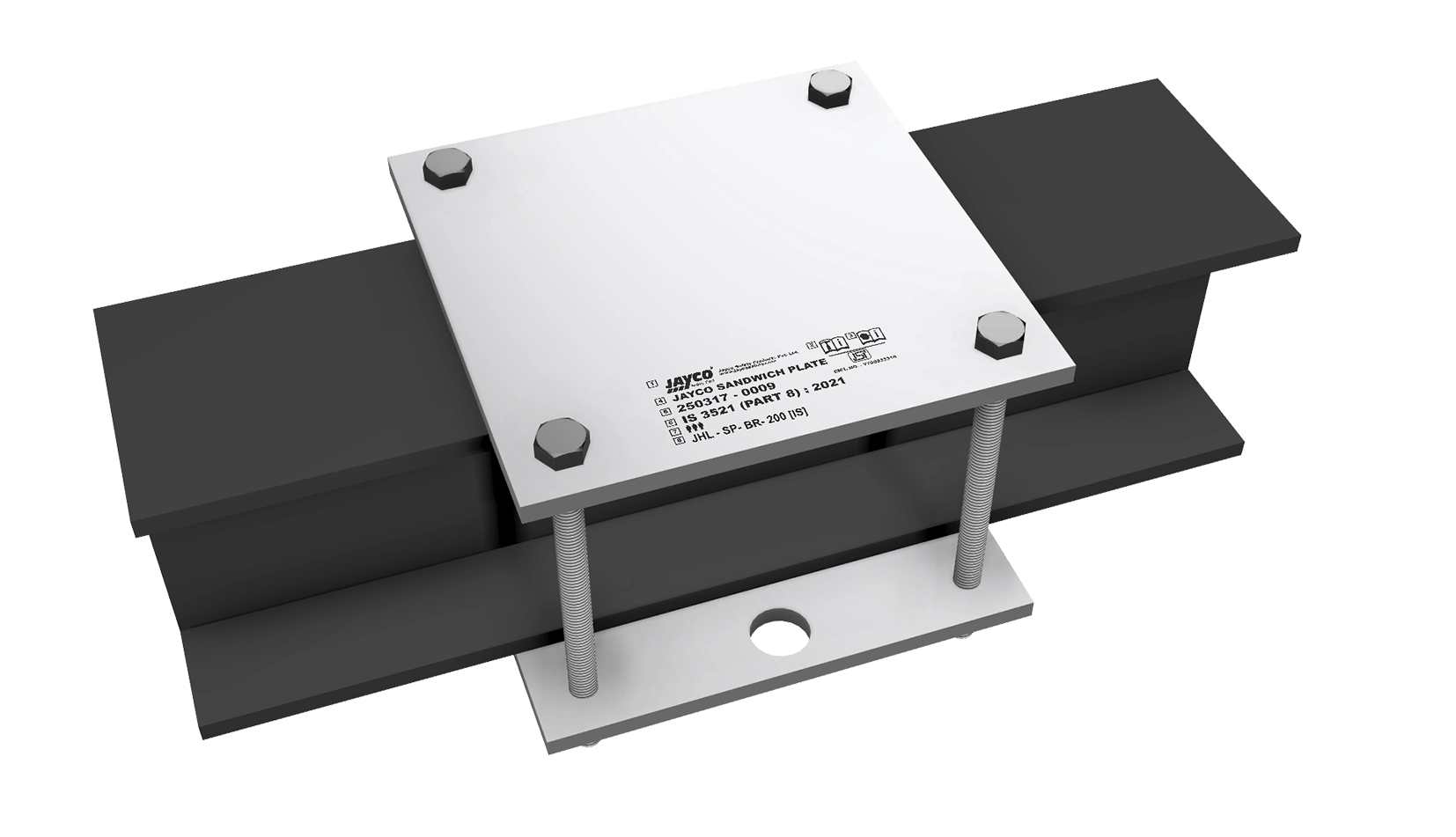
- Used to mount the lifeline on column, purlin, rafter, or ridge where plate-based clamping is preferred.
- Plate is sandwiched between bottom and top plates to grip the structural member.
- 8 mm plate thickness supports a firm structural connection when the sandwich plate is clamped around the member.
- Size varies according to the structure dimension, with SS studs, nuts, and washers holding the plate firmly.
- SS 316 grade construction supports corrosion resistance and long-term durability.
| Code | Reference | Size |
|---|---|---|
| JS 29103 A | JHL-SP-BR-150 | 150 x 150 x 8 mm |
| JS 29103 B | JHL-SP-BR-200 | 200 x 200 x 8 mm |
| JS 29103 C | JHL-SP-BR-250 | 250 x 250 x 8 mm |
| JS 29103 D | JHL-SP-BR-300 | 300 x 300 x 8 mm |
Cantilever And Pole Options
Cantilever poles and pipe-rack supports carry the lifeline where roof mounting is not possible.
Some work zones do not have a roof surface directly below the lifeline. In loading bays, open vehicle areas, beam lines, and pipe racks, the lifeline may need to be held overhead or offset from the structure, so these support options create the required working height and reach.
Cantilever Pole (L-Shaped)
.webp "L-shaped cantilever pole")
- Used to install the horizontal lifeline over loading and unloading areas in open zones.
- 2.5 meter cantilever reach helps position the line over the worker's movement area.
- 6 meter height above ground level supports overhead lifeline placement.
- Cantilever point must withstand a minimum load of 15 kN for fall-protection use.
- M.S. construction with red oxide and industrial paint supports site durability.
- Can be welded in a single piece or shipped in 2 parts, depending on transport and installation needs.
Cantilever Pole (T-Shaped)
.webp "T-shaped cantilever pole")
- Used to install horizontal lifelines over open loading and unloading areas where two vehicle lanes may need simultaneous coverage.
- 2.5 meter cantilever reach on both sides helps position the lifeline over the working zones.
- 6 meter height above ground level supports overhead attachment and worker clearance.
- Cantilever point must withstand a minimum load of 15 kN for fall-arrest performance.
- M.S. construction with red oxide and industrial paint supports outdoor industrial use.
- Can be welded in a single piece or shipped in 2 different parts for easier transport and erection.
Cantilever Bracket
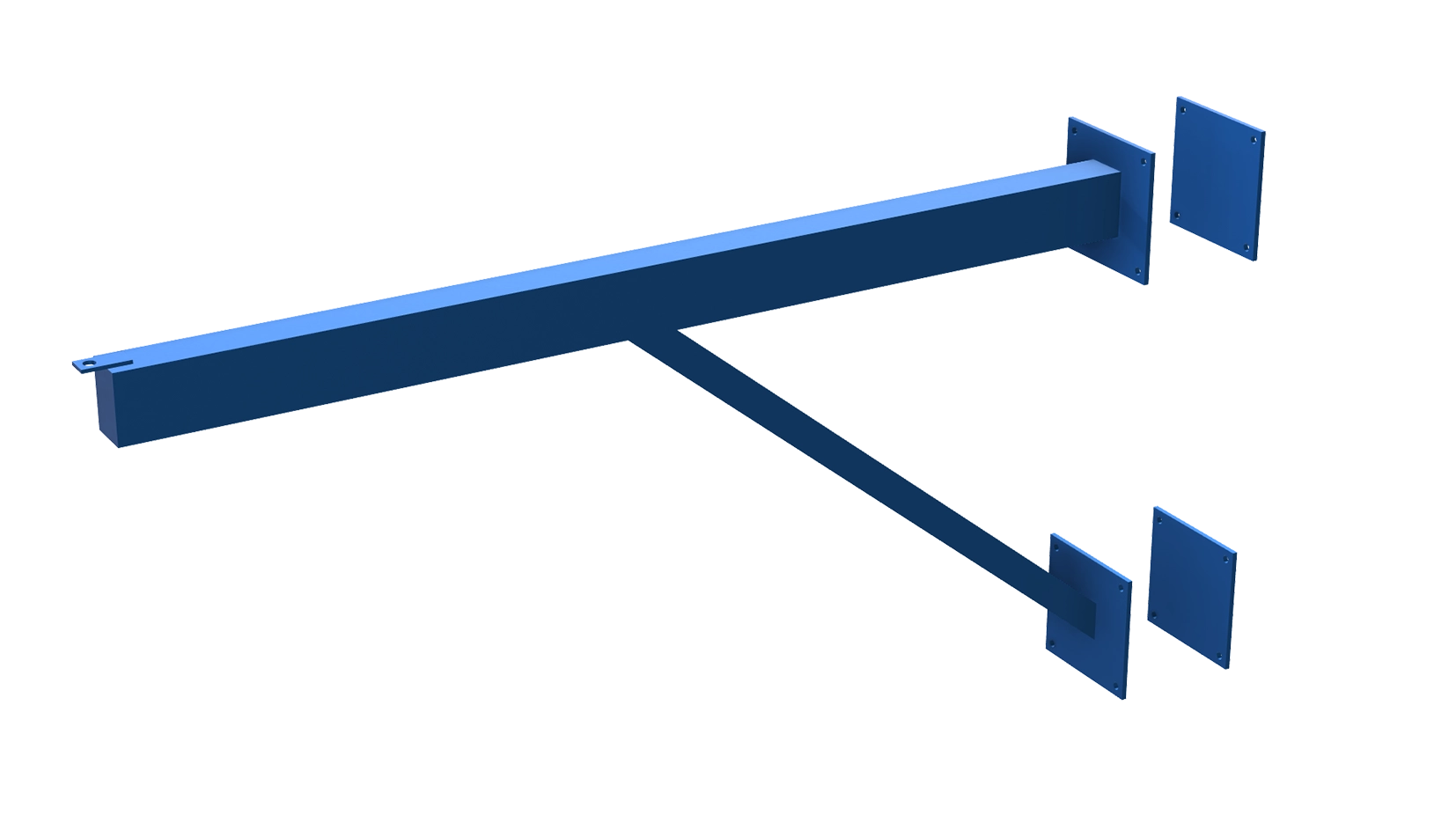
- Used where an existing structure, beam, or pole is already available to carry the lifeline support.
- Can extend up to 2.5 meters to offset the line from the supporting structure.
- Can be welded to the existing structure or mechanically anchored using studs and nuts.
- M.S. construction with red oxide and industrial paint supports robust industrial installation.
Pole For Pipe Racks
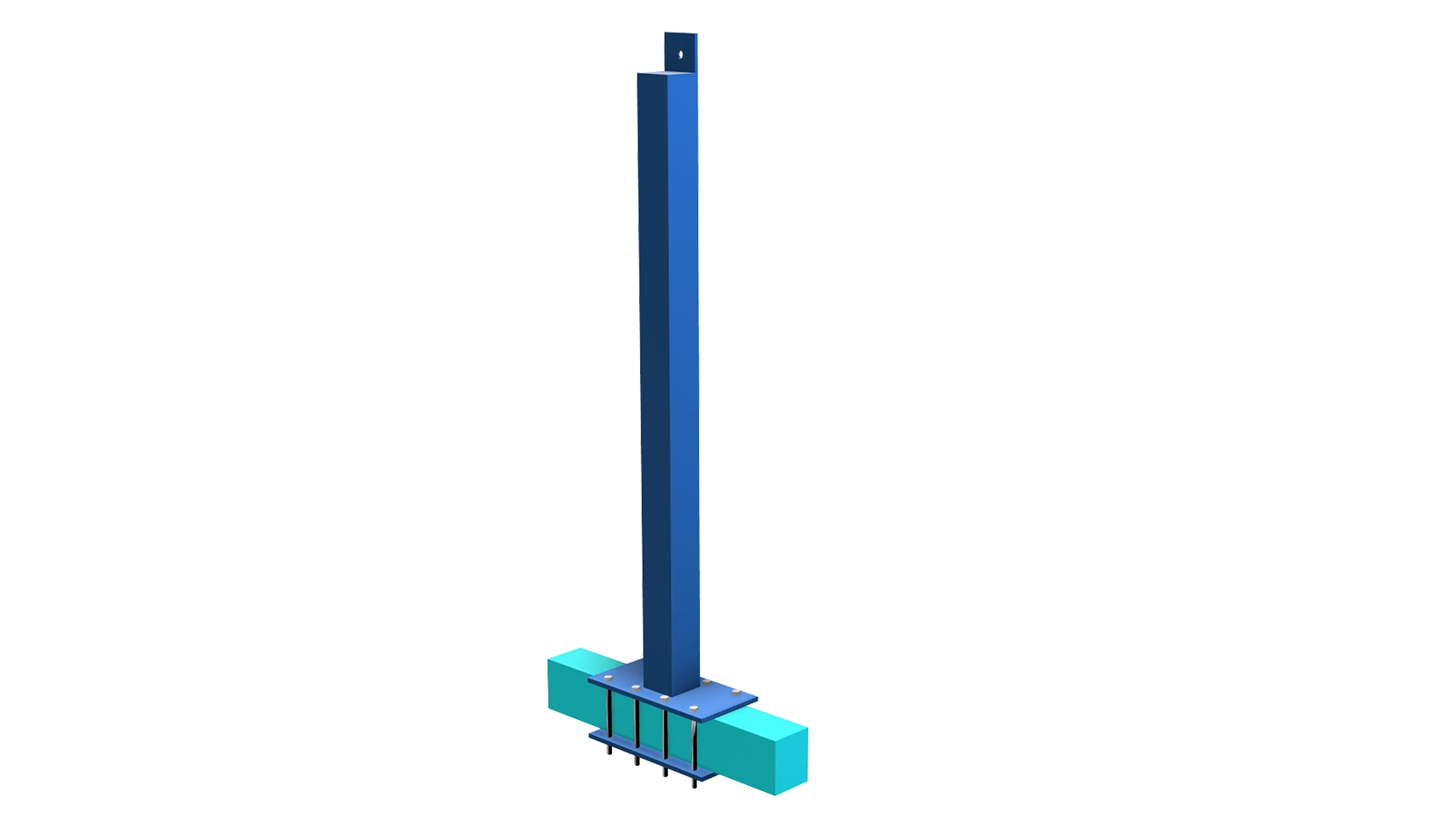
- Tubular robust pole is erected on the existing pipe-rack structure to mount the horizontal lifeline above the work route.
- Base plate is anchored with a sandwich plate and clamped firmly using studs and nuts.
- Top bracket provides the mounting point for lifeline components at the required height above the pipe rack.
- Maximum pole height of 1.5 meters supports controlled line elevation above the pipe rack.
- M.S. construction with red oxide and industrial paint supports durability in plant environments.
Application Range
Horizontal fixed-line systems support roof work, loading activity, pipe-rack access, and industrial maintenance routes.
The same lifeline concept can be adapted to standing-seam roofs, trapezoidal roofs, elevated loading and unloading areas, vehicle maintenance bays, and industrial structures. The mounting method changes with the structure, but the purpose stays the same: allow movement while maintaining a continuous fall-protection connection.
Roof Walk Paths
Configured along roof surfaces so workers can inspect, maintain, or travel across the roof while remaining continuously connected.
Loading And Unloading Areas
Suitable for open areas where workers need fall protection around elevated vehicle, tanker, or cargo zones.
Pipe-Rack Structures
Can be mounted with dedicated pole or sandwich solutions when the pipe-rack structure already exists.
Overhead Or Offset Lines
Supports applications that need brackets, cantilever poles, or pulleys instead of simple roof-post mounting.
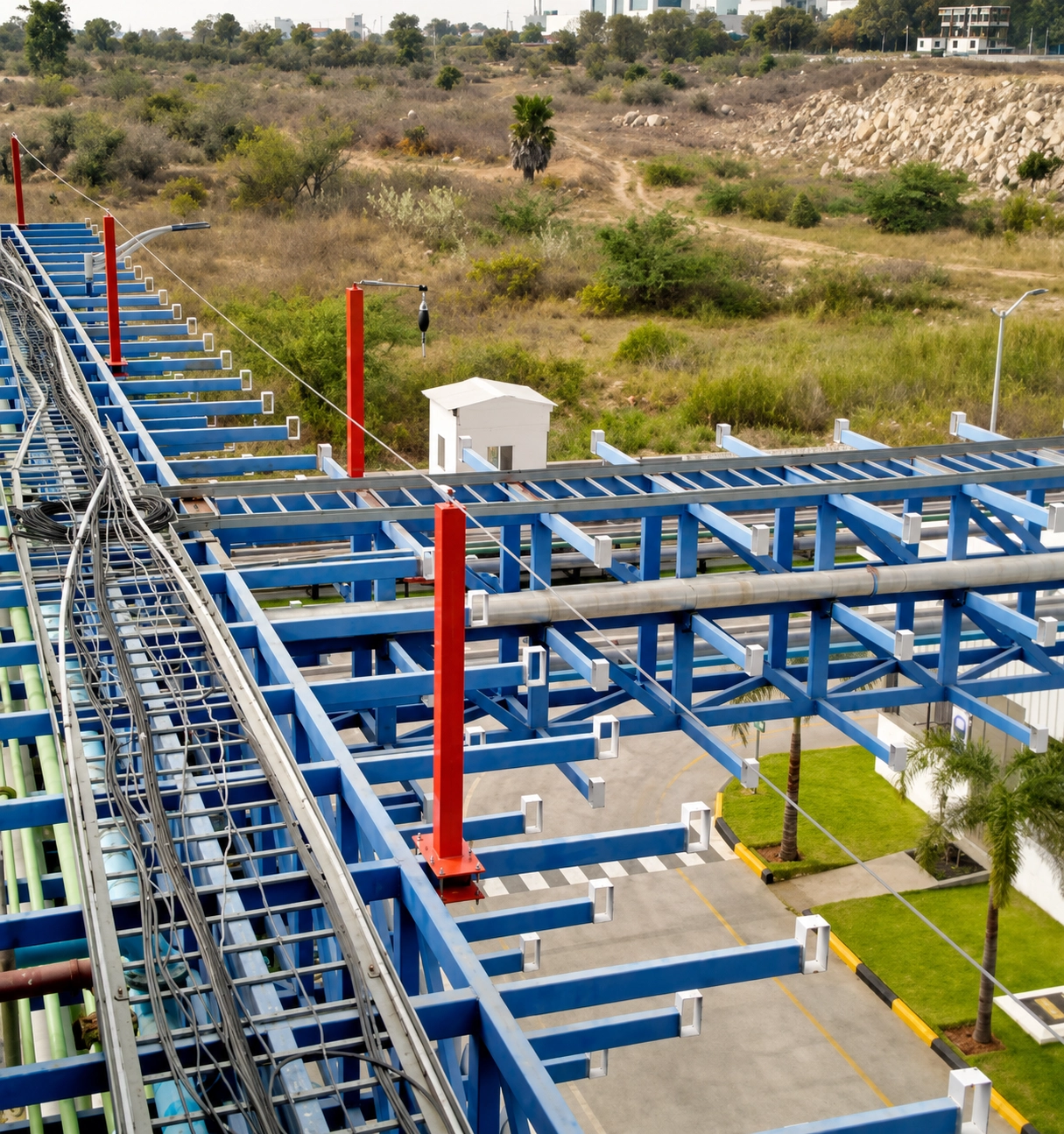
Industrial roof structure and life-line routing
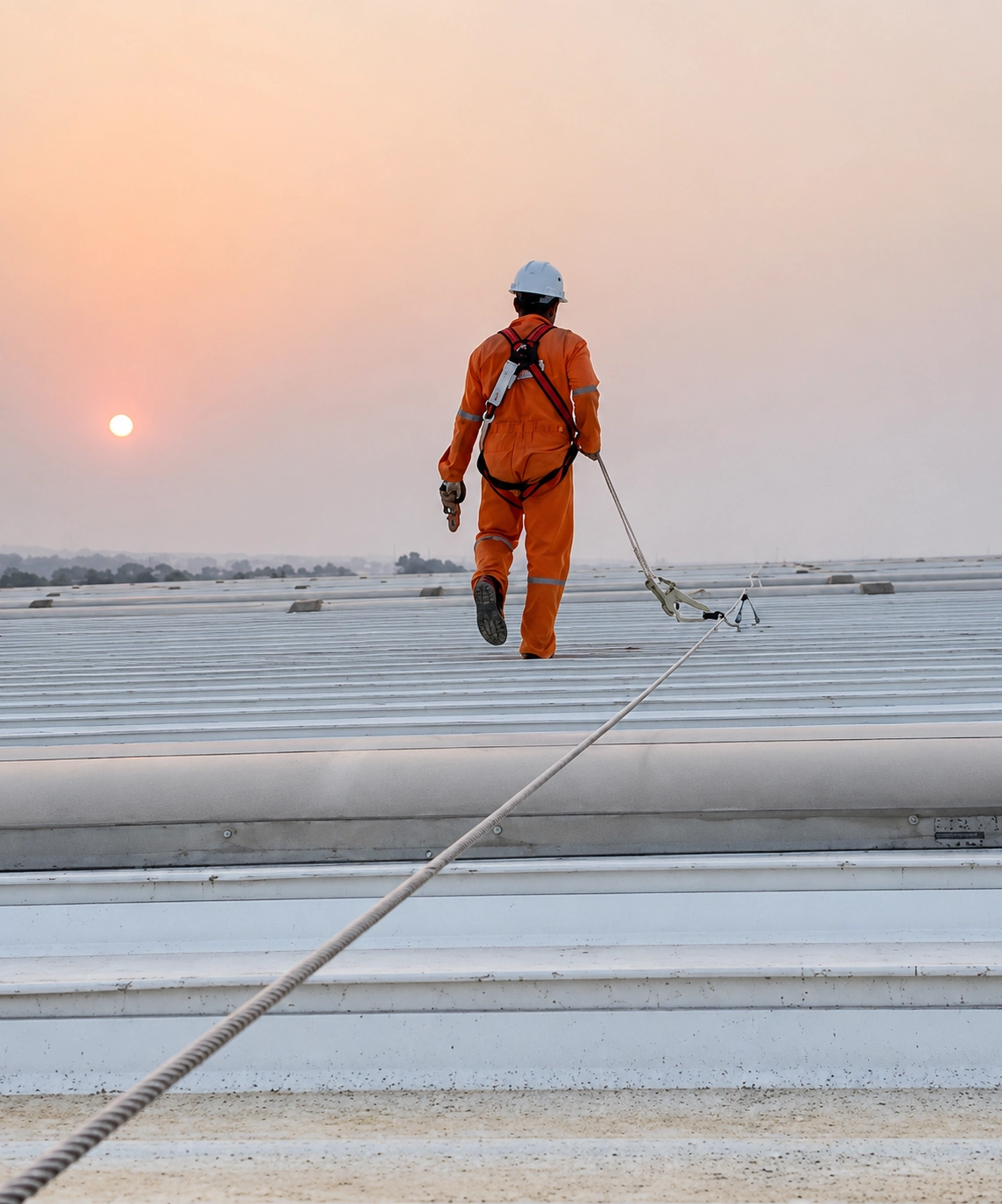
Rooftop walking path with continuous connection
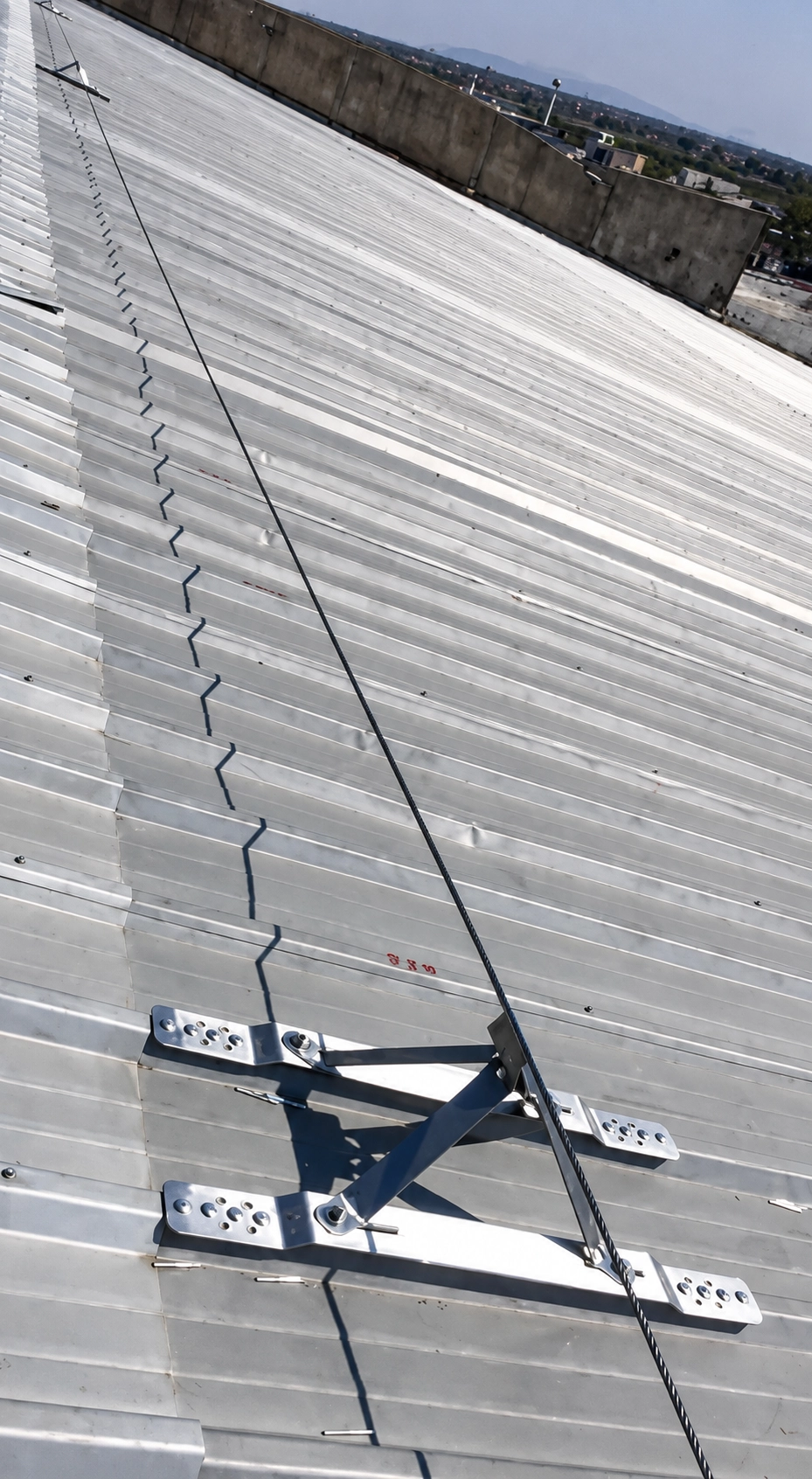
Roof post installation
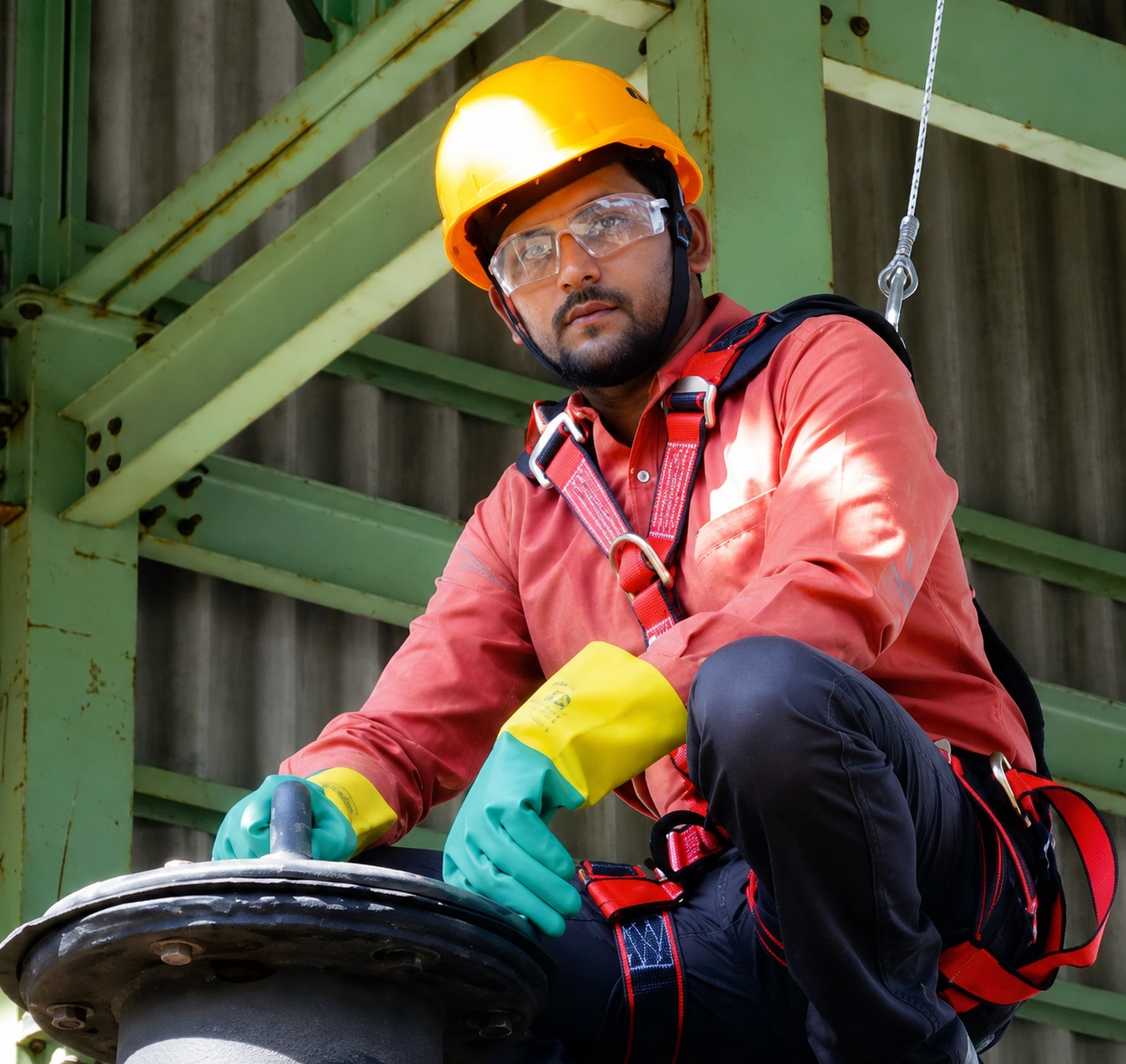
Loading area work zone
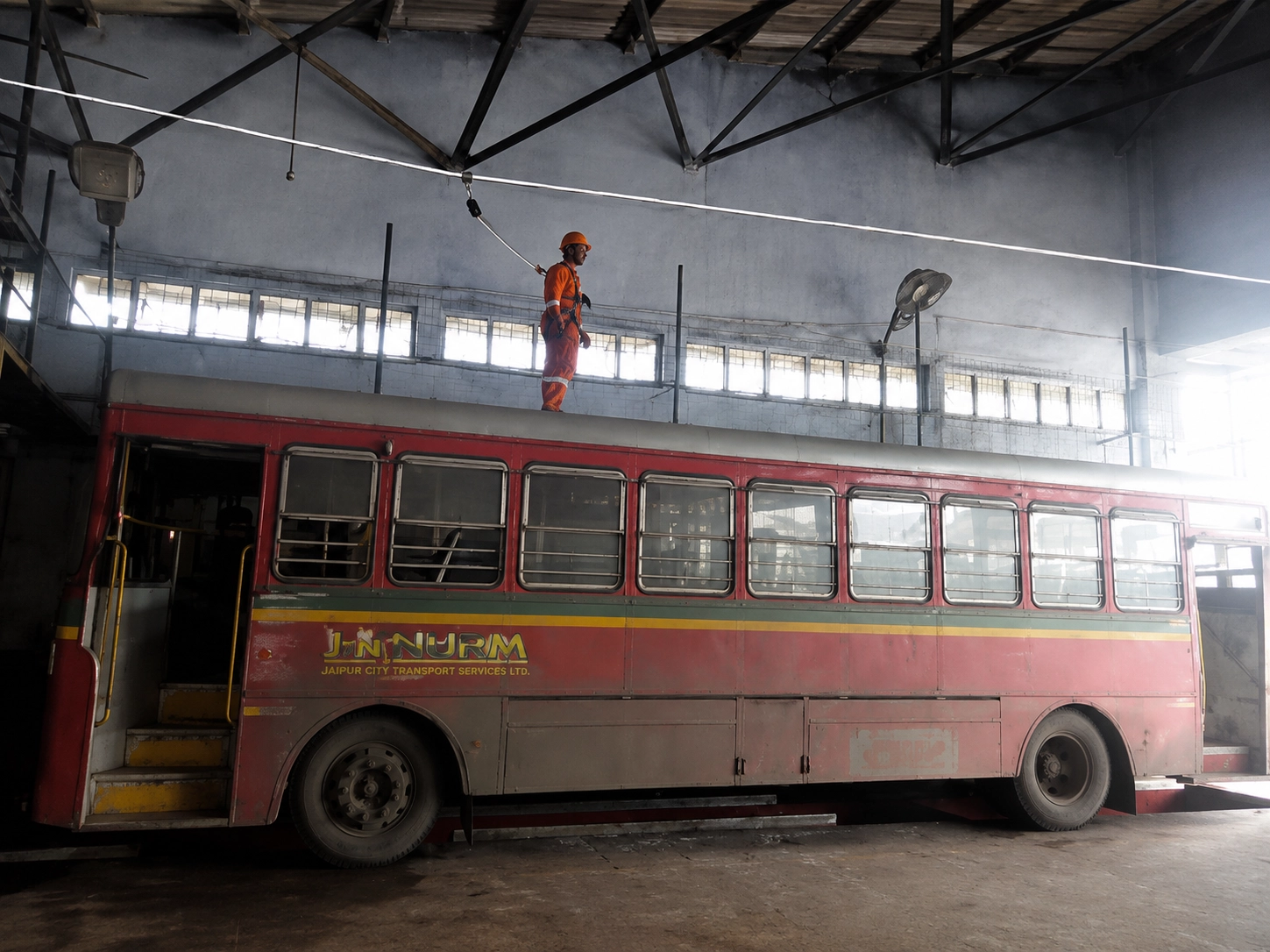
Overhead vehicle bay line
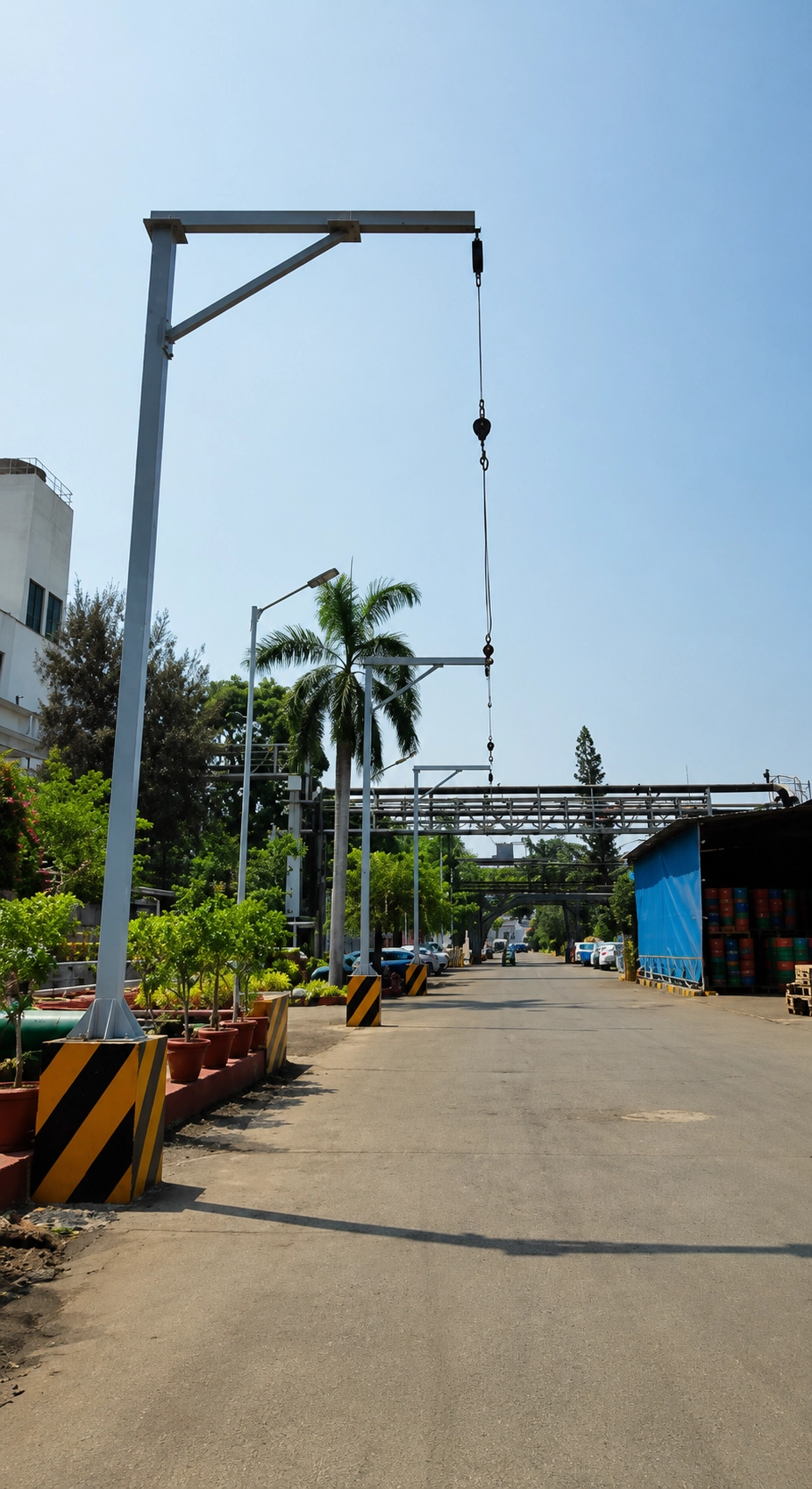
Cantilever support over open area