
Rigid Line For Vertical Climbing
Rigid vertical fall-protection systems for towers, poles, cage ladders, and permanent access routes.
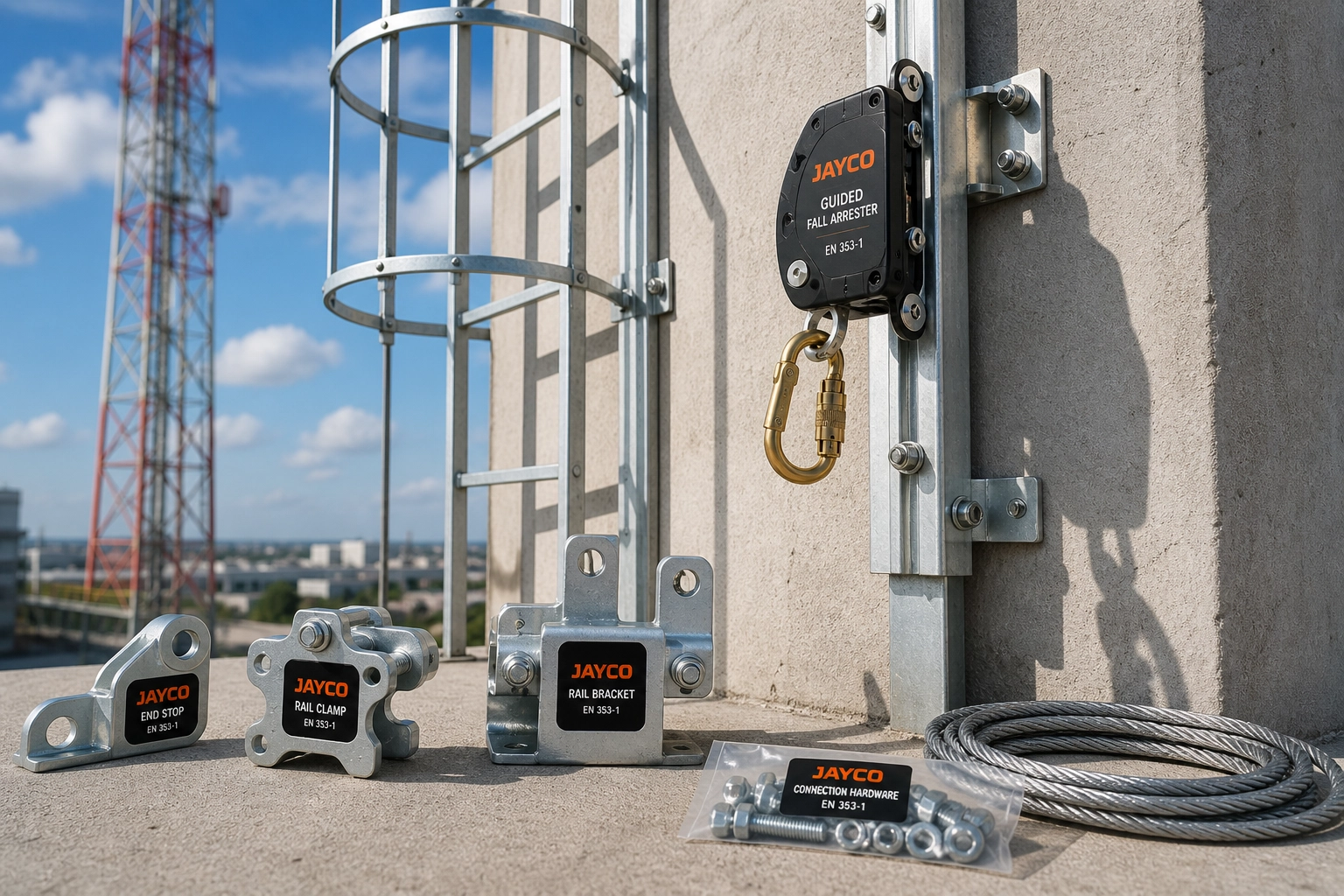
This fixed fall-protection range is built for sites where workers climb the same vertical route repeatedly. Jayco can provide a complete welded safety ladder for new access paths or a C-type rail for existing ladders, with guided fall arresters, end stops, clamps, brackets, and connection hardware configured to match the structure.
4
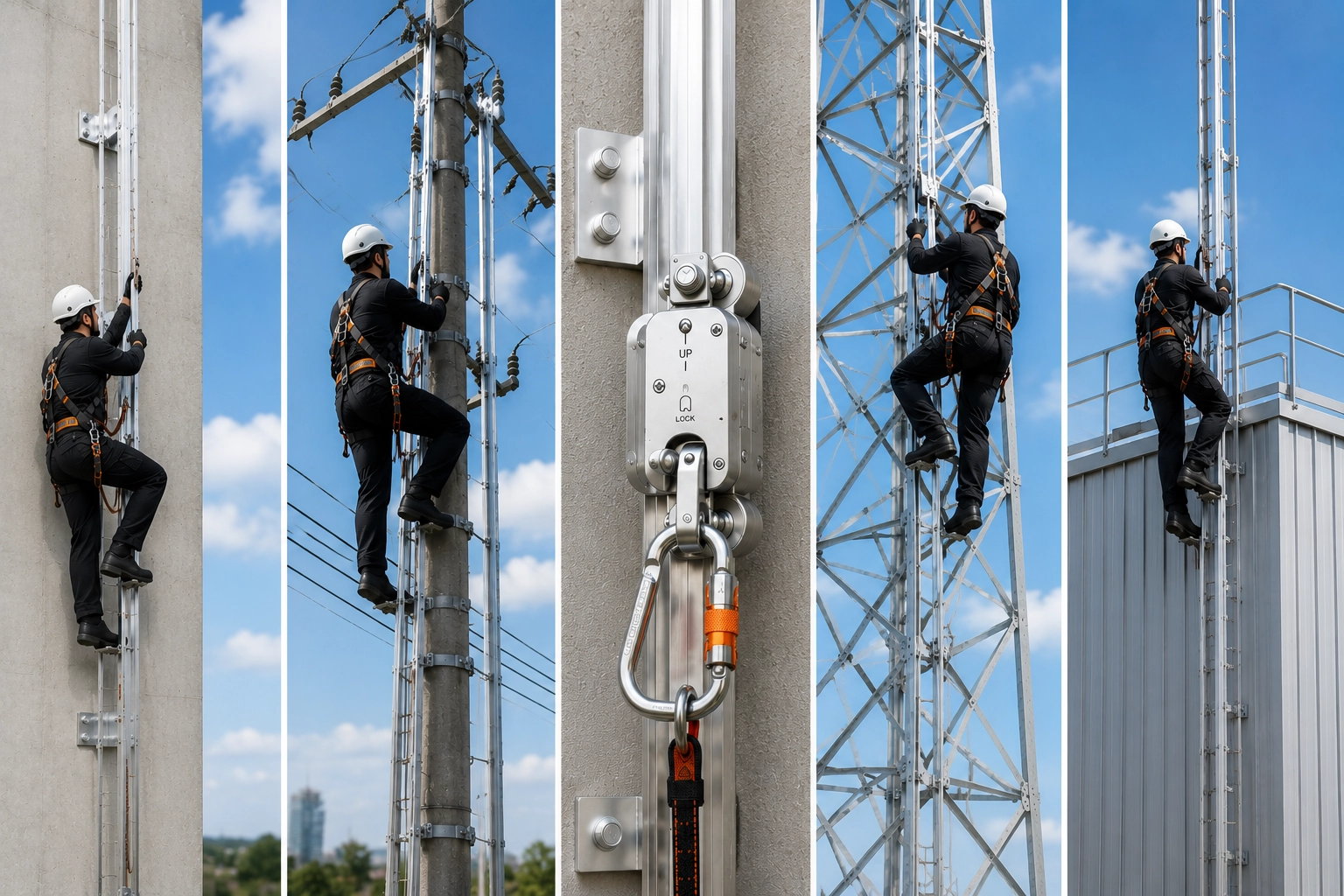
common vertical access applications
Base Systems
Choose a complete welded safety ladder for new access or a C-type rail for existing Vertical Monkey/Cage ladder
The welded ladder is useful when the structure needs a full climbing system, while the C-type rail is better when a ladder already exists and only the guided fall-protection line needs to be added. Both options use hot-dip galvanised construction, fixed spacing, coupling hardware, and limit clamps to create a complete vertical system.
JS 28000 Welded Ladder
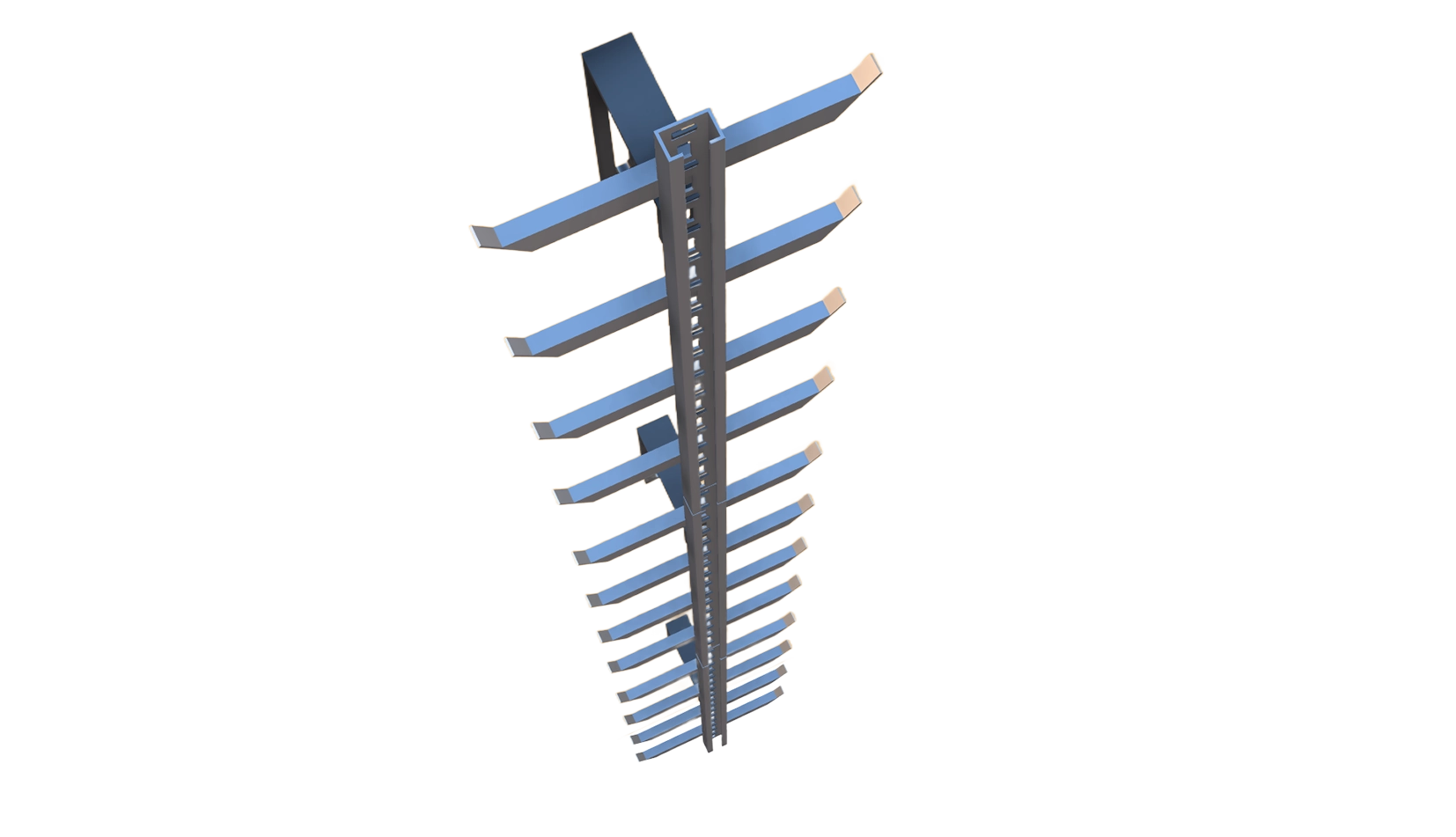
- Welded safety ladder provides the climbing structure and fall-protection guide as one planned access system.
- 50 x 30 mm ladder profile with 3 mm thickness gives the ladder a defined structural section for industrial access use.
- Circumferentially welded steps help prevent dead areas and water pockets between the ladder profile and steps.
- Constant 280 mm rung distance keeps the climb spacing predictable for the worker.
- 150 mm step width on each side gives more stable foot placement during ascent and descent.
- Anti-skid pins improve grip and help reduce slipping risk in wet or dusty site conditions.
- Hot-dip galvanised finish with 65 to 80 micron coating supports corrosion resistance for outdoor structures.
- Guided type fall arrester is used for climbing, with the complete system aligned to EN 353-1:2014+A1:2017.
- C-shape coupling connects ladder sections so different sizes can be assembled into a continuous access route.
- Maximum mounting-bracket distance of 1680 mm helps keep the ladder supported along the structure.
- Hot-dip galvanised mushroom bolts, nuts, and spring washers support durable coupling and mounting.
- Stainless steel limit clamps with spring pins at the top and bottom restrict unintended runner movement beyond the safe travel area.
Standard size availability
| 560 mm | 1120 mm | 2520 mm | 3080 mm |
|---|---|---|---|
| Other customized sizes, if required, are available in multiples of 280 mm. | |||
JS 28001 Vertical C Type Rail
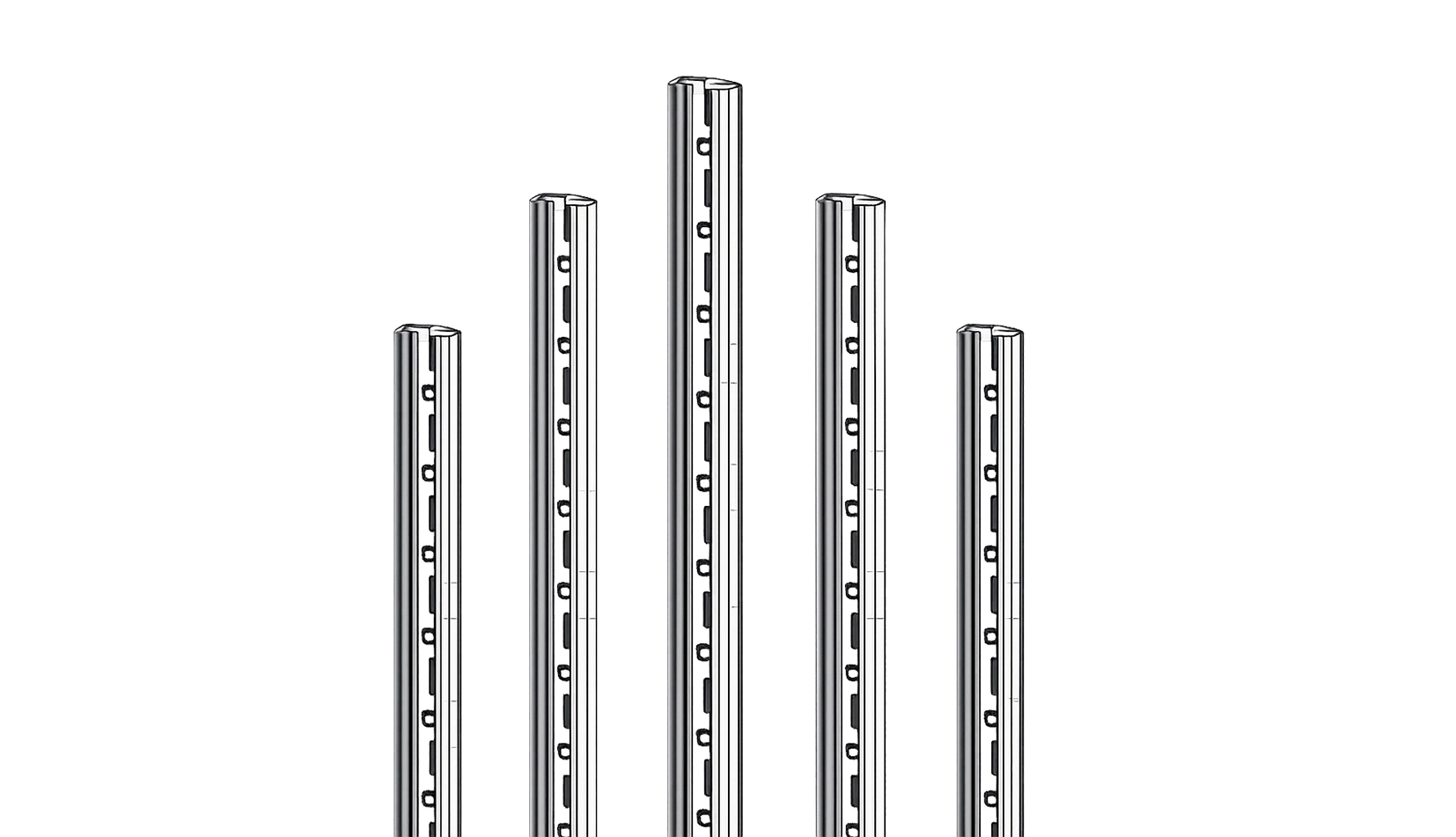
- Vertical C-type rail is fixed on an existing vertical monkey ladder or cage ladder where the ladder structure is already available.
- 50 x 30 mm rail profile with 3 mm thickness gives the guide rail a defined industrial section.
- Hot-dip galvanised coating between 65 and 80 microns helps protect the rail from corrosion.
- Guided type fall arrester travels on the rail, supporting EN 353-1:2014+A1:2017 certified climbing protection.
- C-shape coupling connects rail sections so the system can continue over longer access routes.
- Special brackets mechanically adapt the rail to different existing rung shapes and sizes.
- Mechanical clamps allow retrofit installation without welding, drilling, or hot-work activity on the structure.
- Maximum mounting-bracket distance of 1680 mm helps maintain stable rail support.
- Modular rail sizing helps match the system to different ladder heights and site layouts.
- Continuous guided movement keeps the climber connected during ascent and descent.
- Compact C-rail profile keeps the installation neat on ladder access routes.
- Defined rail track helps control fall-arrester movement along the climbing line.
- Hot-dip galvanised coupling and bracket hardware improves durability at exposed connection points.
- Stainless steel limit clamps with spring pins at the bottom and top restrict the fall arrester to the intended travel path.
Standard size availability
| 560 mm | 1120 mm | 2520 mm | 3080 mm |
|---|---|---|---|
| Other customized sizes, if required, are available in multiples of 280 mm. | |||
Guided Fall Arrestor
A travelling runner that keeps the climber connected to the rigid ladder or rail system.
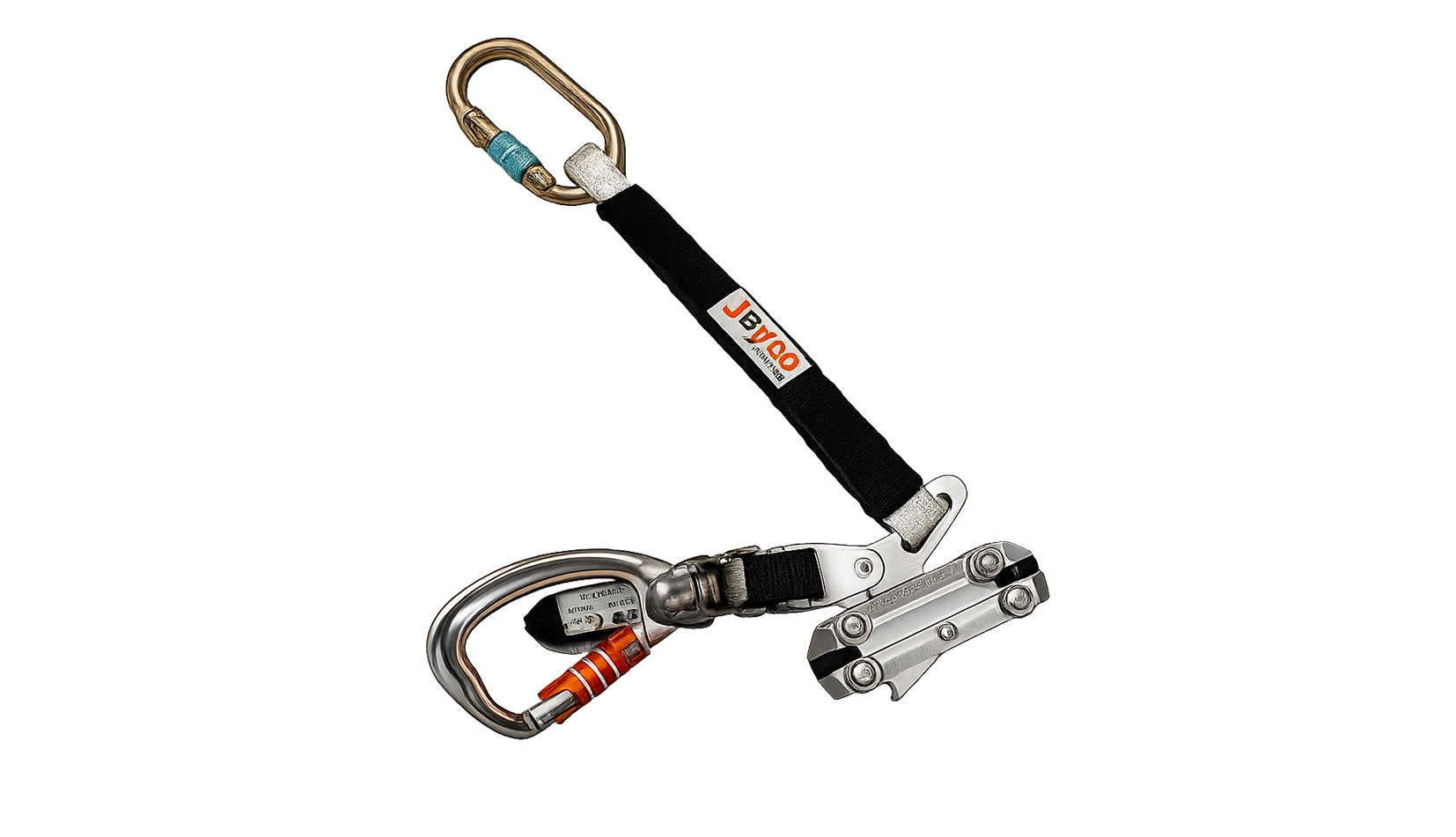
The guided fall arrestor is the moving connection between the worker and the vertical fixed line. It travels with the user during ascent and descent, locks during a fall event, and uses guided wheels, swivel movement, and shock-absorbing attachment options to keep climbing safer and smoother.
Runner role
Moves with the worker and arrests the fall on the rigid guide.
Single attachment runner option for guided climbing on the rigid line.
Double loop textile option with integrated shock-absorbing connection.
Why the runner matters
The ladder or rail gives the worker a fixed path, but the runner is what keeps the worker attached while moving. Its wheel-guided body helps it travel smoothly, while the locking and shock-absorbing details help control the load if a fall occurs.
Smooth Guided Travel
Large wheels and stable construction help the runner move up and down the rigid guide without needing the worker to change attachment at each rung.
Short Arrest Response
Very short arrest distance helps reduce fall movement when the runner locks during an incident on the vertical line.
Shock-Absorbing Connection
Integrated textile shock absorber options help control load transfer to the user during fall arrest.
Incorrect Feed-In Protection
Safety pin support helps prevent incorrect feed-in at the rail port during installation or use.
Runner technical highlights
- Aligned with EN 353-1:2014+A1:2017, CE 2927, and EU 2016/425 module D certification context.
- Aluminium tri-lock swivel carabiner supports secure user connection with controlled movement.
- Steel-capsuled 16 mm ball-bearing wheel improves runner travel and durability.
- Body milled from one block with guided wheels at top and bottom for stable alignment on the rail.
- 360 degree swivel, 90 degree up/down, and 180 degree left/right movement support changing body positions while climbing.
- Available as single attachment or double attachment fall arrester depending on the user and system requirement.
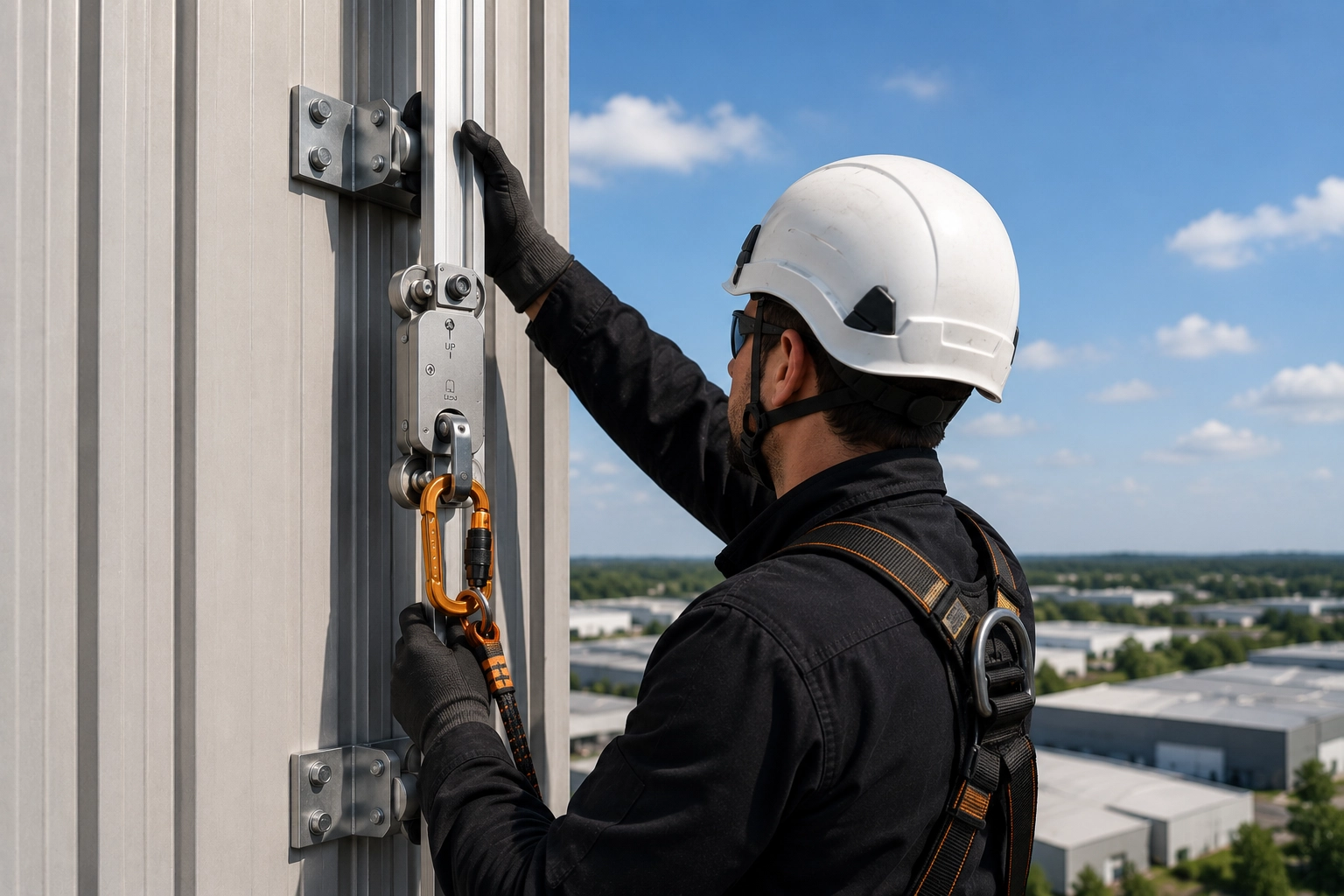
Connection behavior in use
The smooth sliding attachment supports chest and abdomen connection points and helps avoid fall-back while the worker climbs, descends, or changes body position on the vertical access route.
Where this runner is used
- High must access where technicians need a fixed vertical climbing route.
- Electric pole access where guided ascent and descent improve worker control.
- Railway pole access for maintenance teams working on repeated vertical routes.
- Transmission tower / pole access where the structure requires permanent guided climbing protection.
- Roof climbing and other vertical access points where a ladder or rail connects the lower route to the work level.
Accessories
End stops, brackets, clamps, and connection hardware complete the vertical fixed-line system.
These support components determine how the ladder or rail is joined, mounted, terminated, and protected from incorrect runner movement. They are important because the fall-arrest line performs correctly only when the supporting hardware matches the actual structure and access route.
End Stops
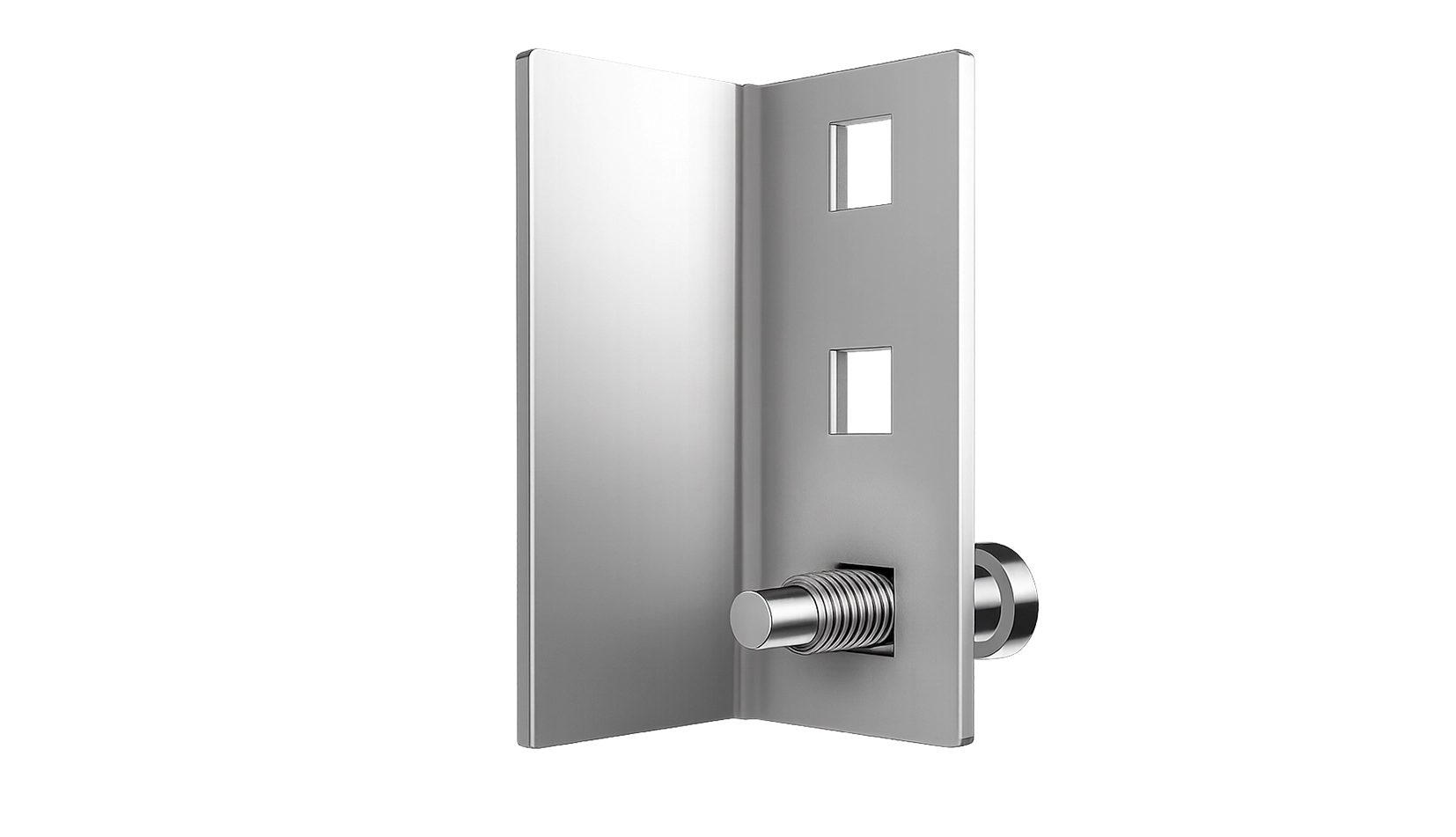
- Installed at the start and end of the vertical rigid lifeline to define the runner travel zone.
- Pull pin allows controlled runner removal from the rigid lifeline when required.
- Fixed with the mushroom bolt so the end stop remains mechanically secured.
- Used in both ladder and rail arrangements, keeping the termination method consistent.
Connection Plates
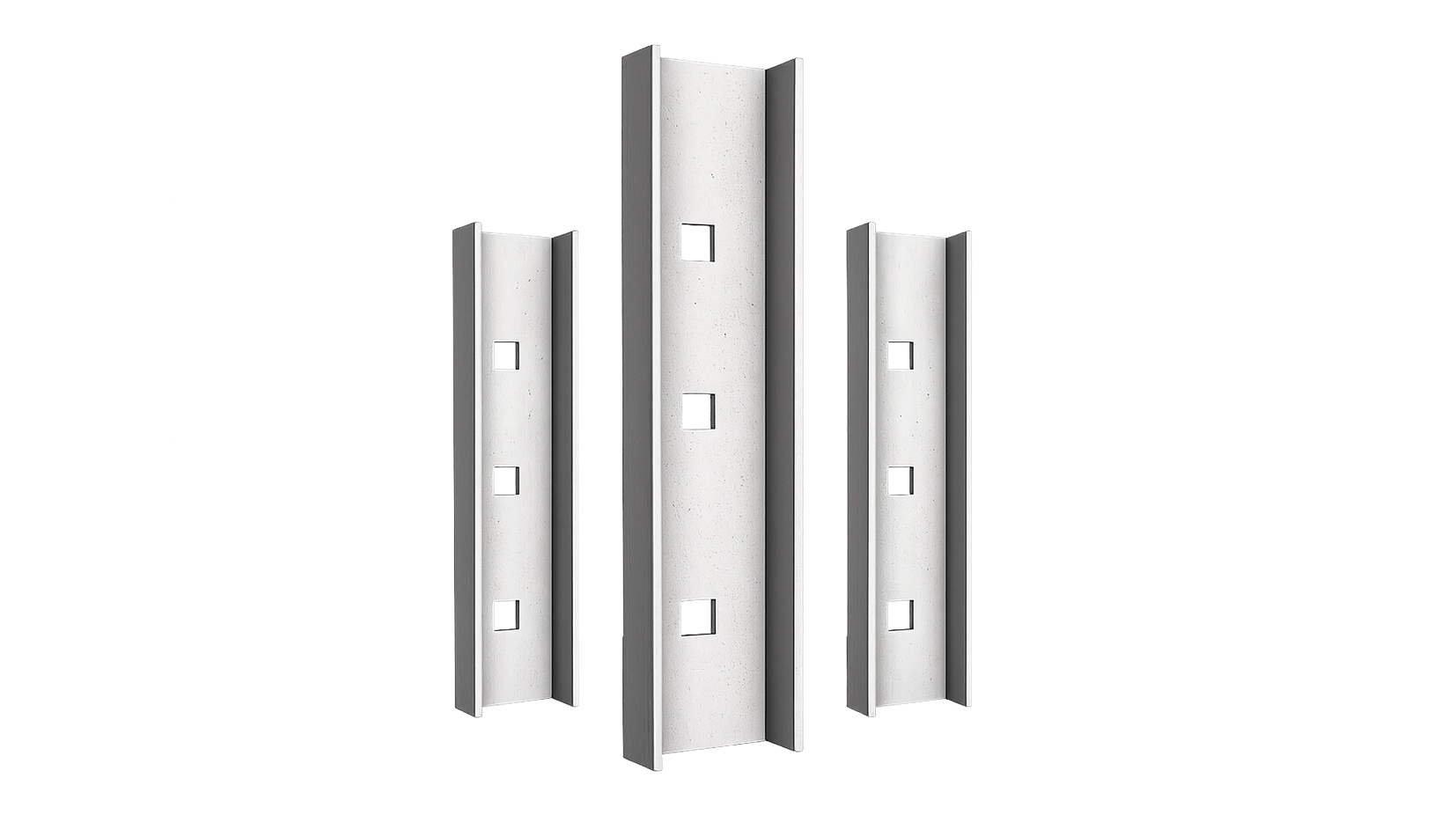
- Join two ladder or rail sections so the guide path remains continuous.
- Connected and tightened with mushroom bolts to maintain alignment at section joints.
- Installed in both ladder and rail systems to support modular assembly.
- Hot-dip galvanised construction supports durability at connection points.
Mushroom Bolt and Nut
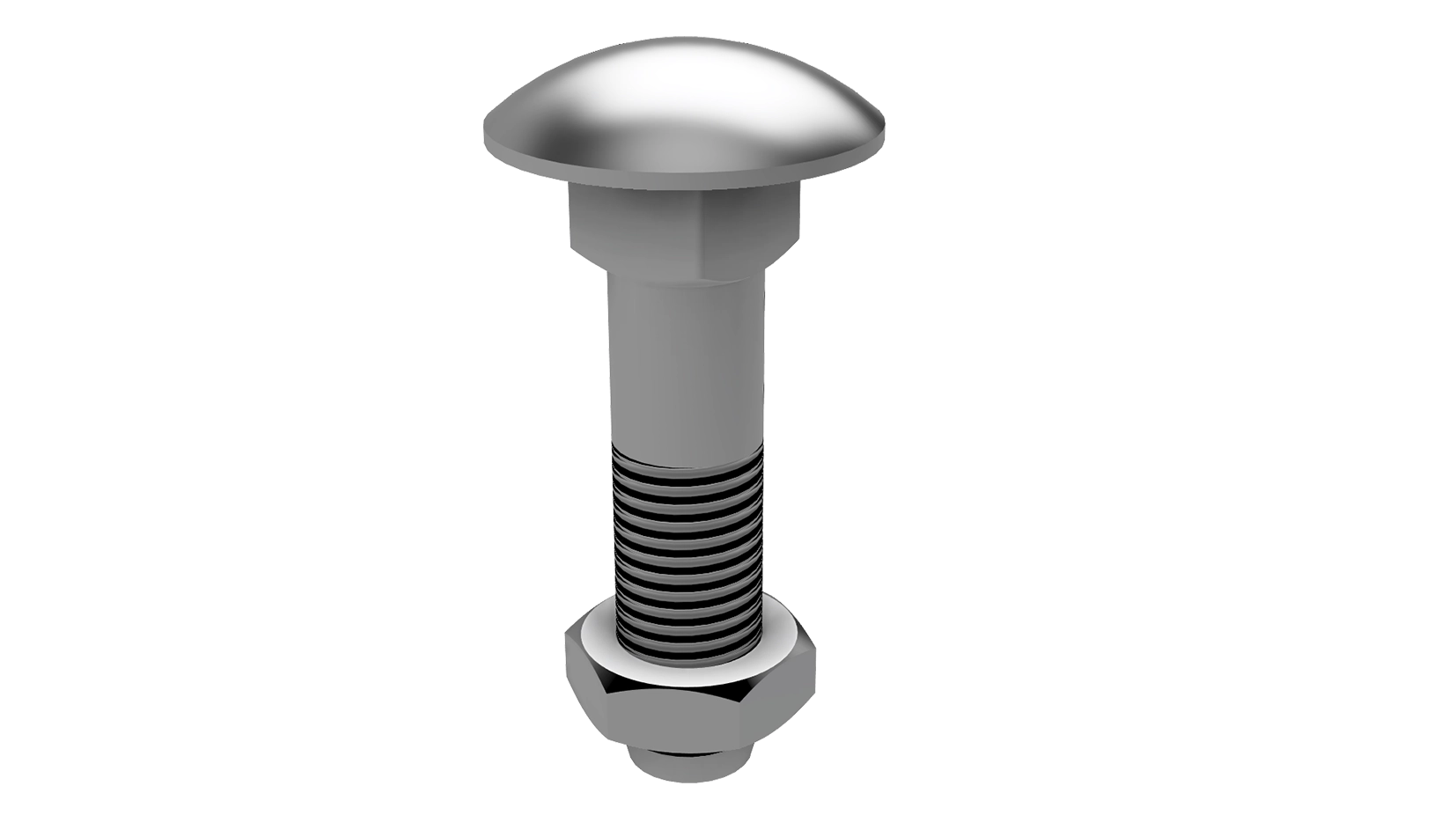
- Special mushroom-head bolts mechanically fasten the vertical rigid lifeline components.
- Square recessed feature below the mushroom section helps the bolt seat correctly during tightening.
- Spring washer helps absorb vibration from user movement and wind velocity.
- M12 diameter, hot-dip galvanised size option supports corrosion resistance in outdoor installations.
Bracket
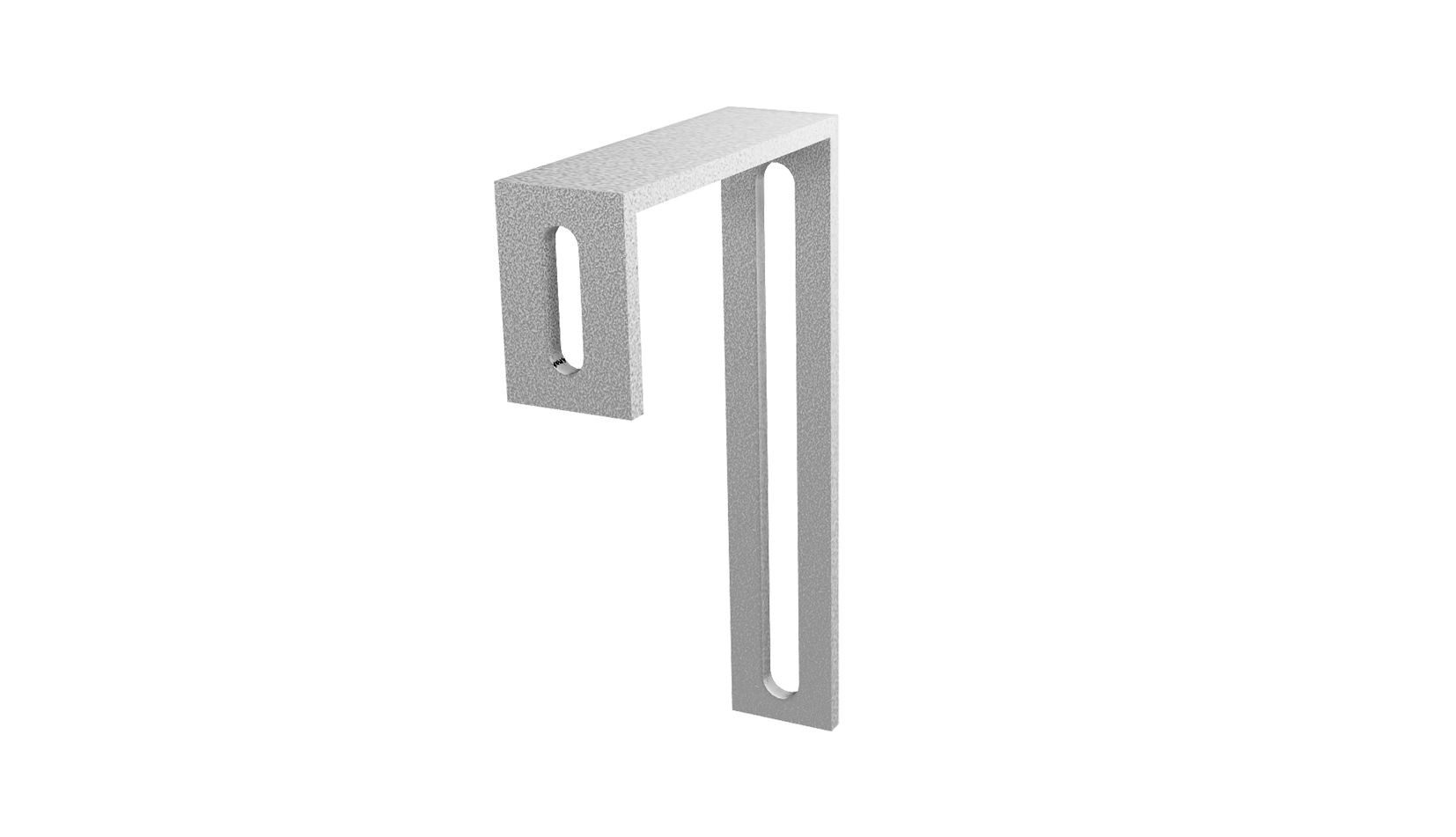
- Used to mount the ladder or line with rigid structures while keeping the system aligned.
- Distance between two brackets should not exceed 1600 mm to maintain support stability.
- Front-end slot helps align the vertical rigid line with the bracket position during installation.
- Can be used for RCC columns, sections, and similar structural members.
- Installed using mechanical fasteners without welding or puncturing the main structure.
- Custom brackets can be designed when the structure has unusual geometry or access constraints.
Foot Rest
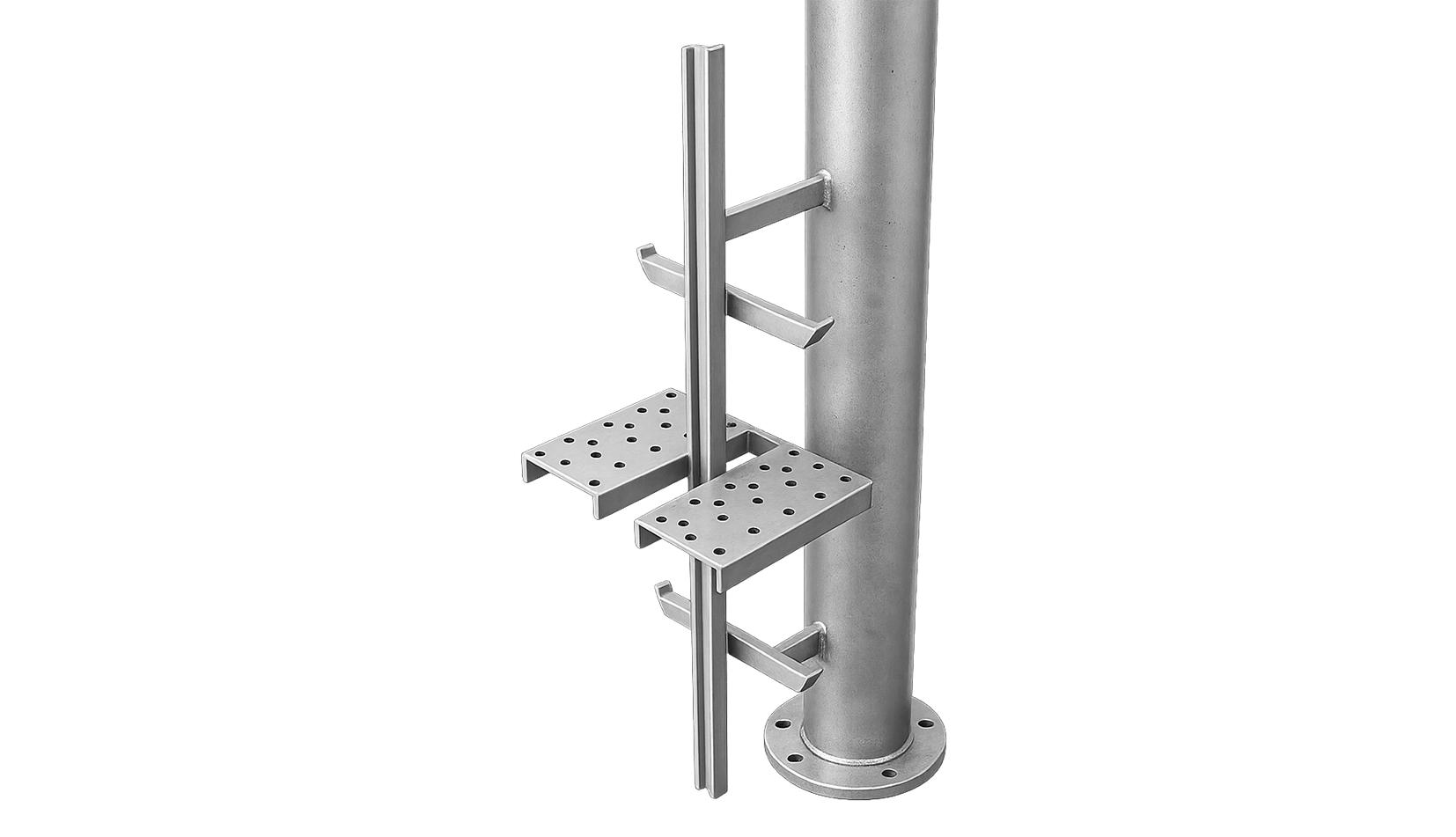
- Pedestal foot rest can be provided at selected intervals for long vertical climbs.
- Hinged design keeps the foot rest folded inside during normal climbing.
- Opens only when required, giving the worker a rest point without blocking the ladder route.
- Anti-skid surface helps reduce slippage when the worker pauses during a long climb.
- Usually installed every 15 to 20 meters to reduce fatigue and improve worker efficiency.
- Hot-dip galvanised construction supports outdoor durability at exposed resting points.
Clamps For Vertical Rail
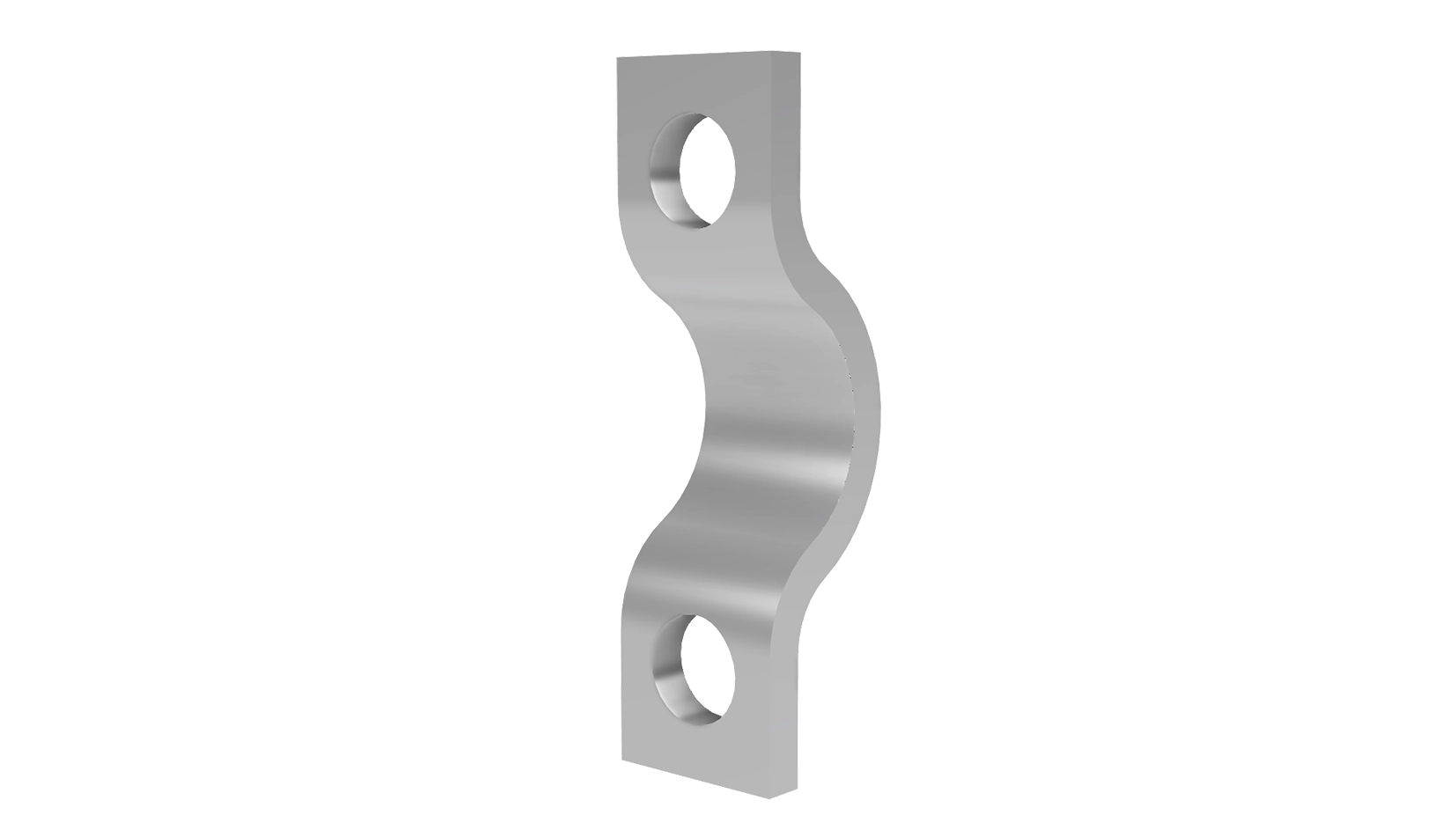
- Used to install the rail on existing ladders or monkey ladders during retrofit work.
- Hot-dip material with clamp size selected according to the existing ladder rung size.
- Distance between two clamps should not exceed 1600 mm to keep rail support consistent.
- Mounted using mushroom bolts, nuts, and spring washers for mechanical fastening.
- No welding, drilling, or puncturing of structures is required, reducing site disruption.
Application Range
Vertical fixed-line systems give workers a permanent guided path on high-access structures.
The system is suited to transmission towers, octagonal towers, poles, and cage-ladder structures where workers need to climb with continuous guidance. Instead of relying on temporary anchorage decisions at height, the ladder or rail creates a defined movement path from the lower access point to the work level.
Transmission Tower
Fall-safe ladder system for steel tower climbing where technicians need repeated maintenance access with guided protection.
Octagonal Tower
Rigid-line solution mounted on tower ladders where a compact guided system is required for vertical movement.
Pole Access
Used on poles and similar narrow vertical structures where the worker needs guided ascent and descent without changing attachment points repeatedly.
Cage Ladder Access
Configured with a fall-safe rail on cage-ladder arrangements so the existing access route gains a dedicated guided fall-arrest path.
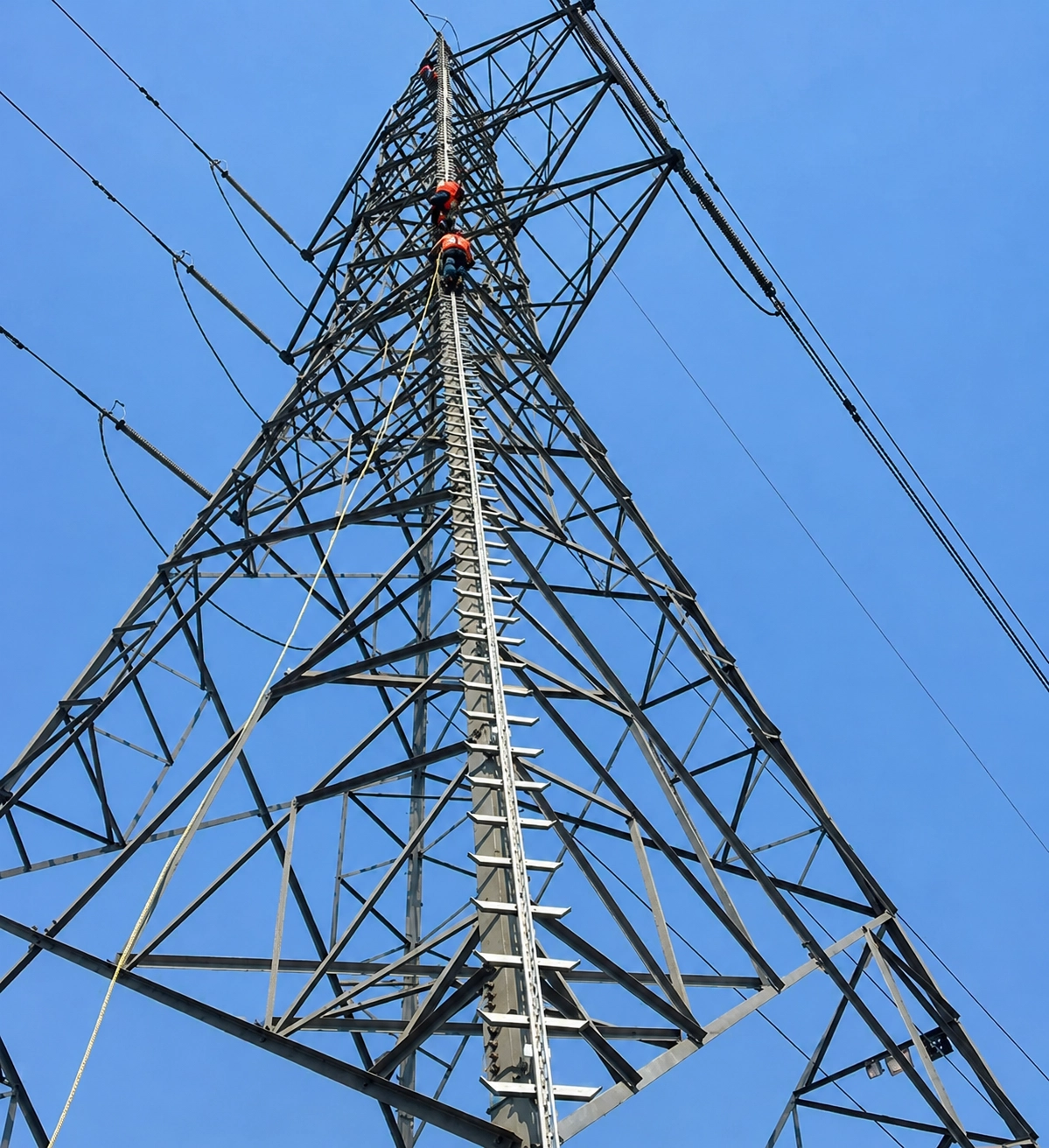
Fall safe ladder on transmission tower
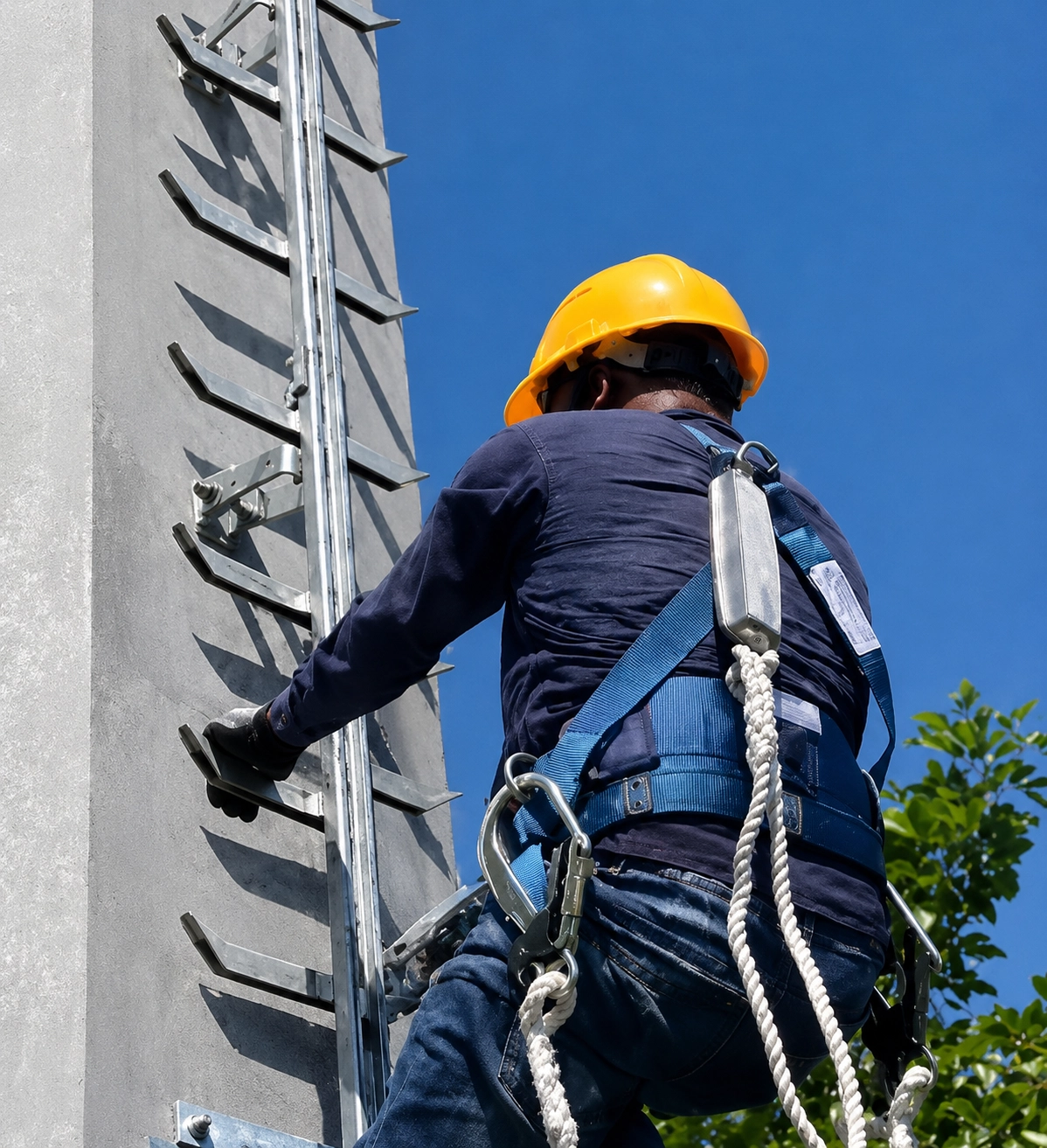
Fall safe ladder on octagonal tower
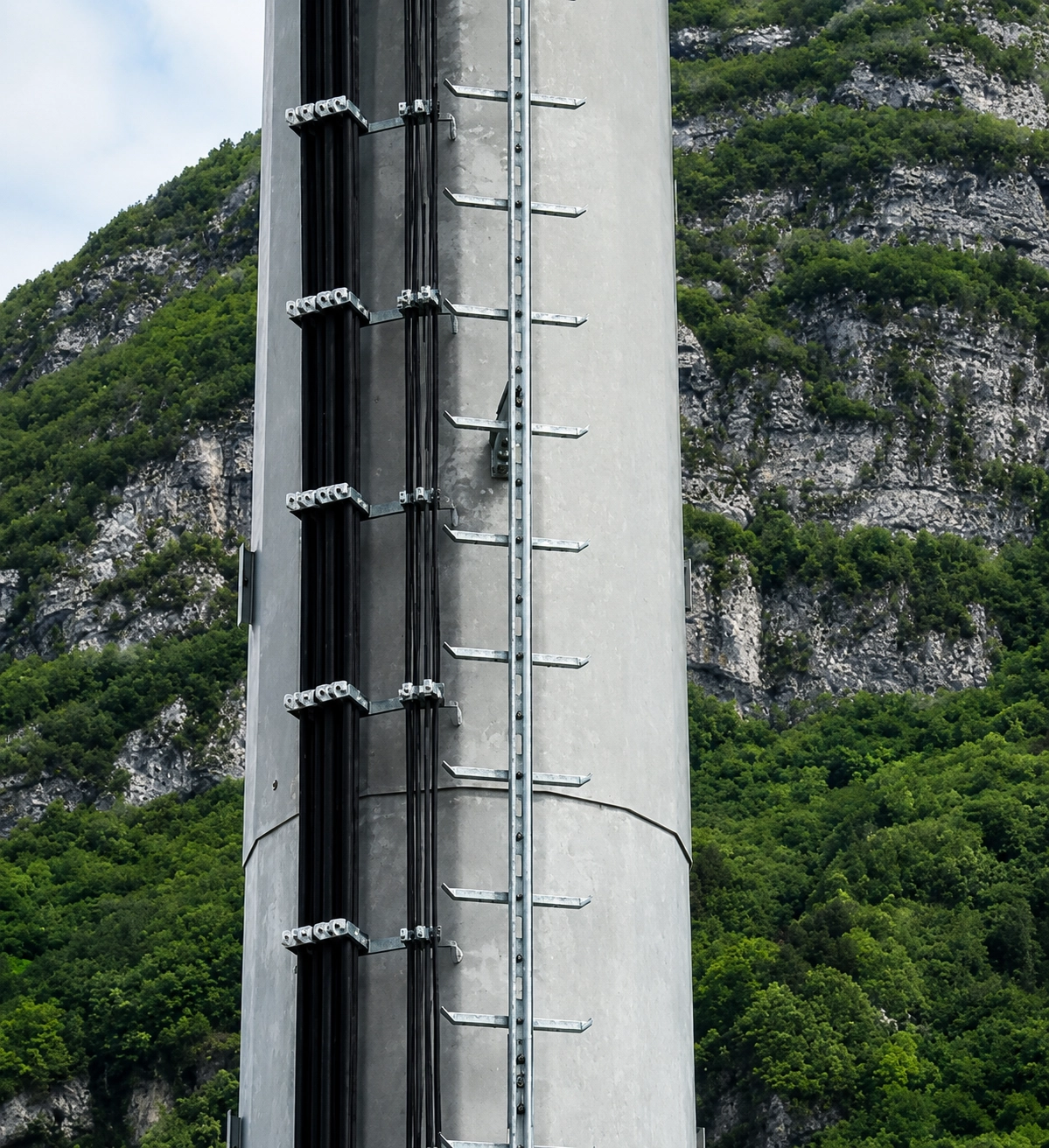
Fall safe ladder on pole
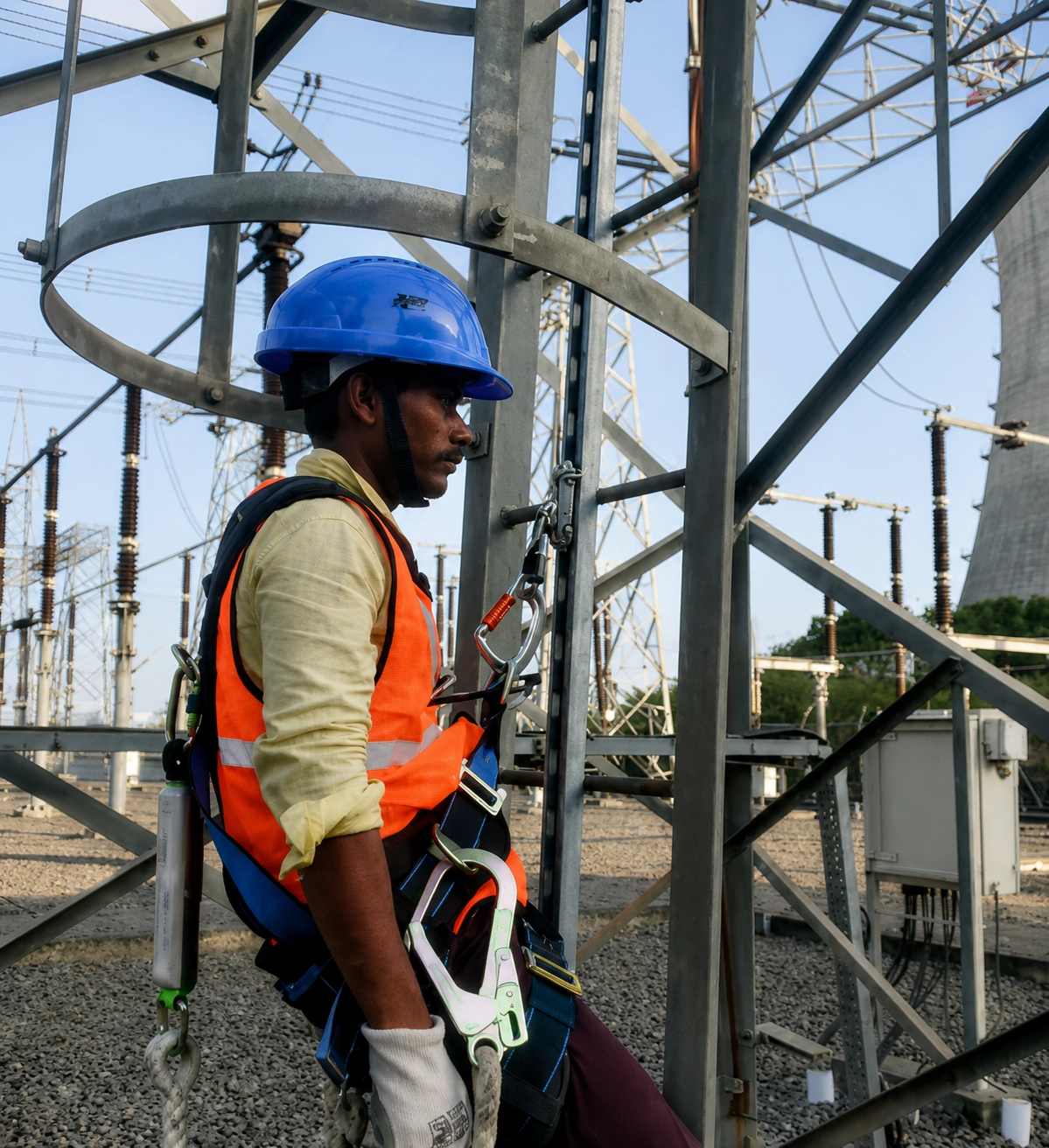
Fall safe rail with cage ladder